
Furnace and Fugue. A multimedia edition of Michael Maier’s Atalanta fugiens
DOI: 10.18716/ride.a.18.4
Abstract
Furnace and Fugue is a digital edition of Michael Maier’s (1568-1622) opus magnum, the emblem book Atalanta fugiens (1617/18) in which Latin and German texts are paired with images and musical fugues in an enigmatic way to engage users of the book in deep meditation on alchemical subjects. The digital edition of the text itself, including an English translation based on a 17th century manuscript, is accompanied by a number of scholarly essays. A main feature is the MEI player, which includes a piano roll visualisation that allows users to experience the musicological makeup of Atalanta fugiens even without a background in music theory. The edition is a beautifully designed “haute couture” edition, intended to provide an example for the future of digital scholarly publishing. The project has used digital editing effectively to enable the multimedia experience that Michael Maier had likely envisioned for Atalanta fugiens. but which was previously inaccessible to most users of the book.
Introduction
Furnace and Fugue is a digital edition of the multimedia emblem book Atalanta fugiens (1618a), authored by alchemist Michael Maier (1569-1622). In addition to customary text, this alchemical emblem book also contains a fugue to accompany each image. The narrative frame for the collection of fifty emblems is the ancient myth of Atalanta and Hippomenes’ race (Wels 2010, 150). Early modern emblematics tend to be meant as food for thought, whereby readers (or maybe rather, users) of the emblem book meditate upon the often obscure symbolism to get a moral message. Maier’s Atalanta fugiens is innovative in its adaptation of emblematics for alchemy and in its addition of a third layer (music) to the already multi-medial emblematics (consisting of text and image). Since both alchemy and emblematics on their own have a reputation of being somewhat hard to unriddle, the combination thereof supplies as an ideal source for a digital edition, offering lots of opportunities for including additional information, data enrichment, or other explanatory resources. More information about Atalanta fugiens can be found in Furnace and Fugue as well as all the other many publications on Atalanta fugiens and thus, shall not be repeated here in detail.* This review* will discuss Furnace and Fugue in the context of digital scholarly editing, describe the project website and its features as well as provide a short review of the scholarly essays included in the digital publication.
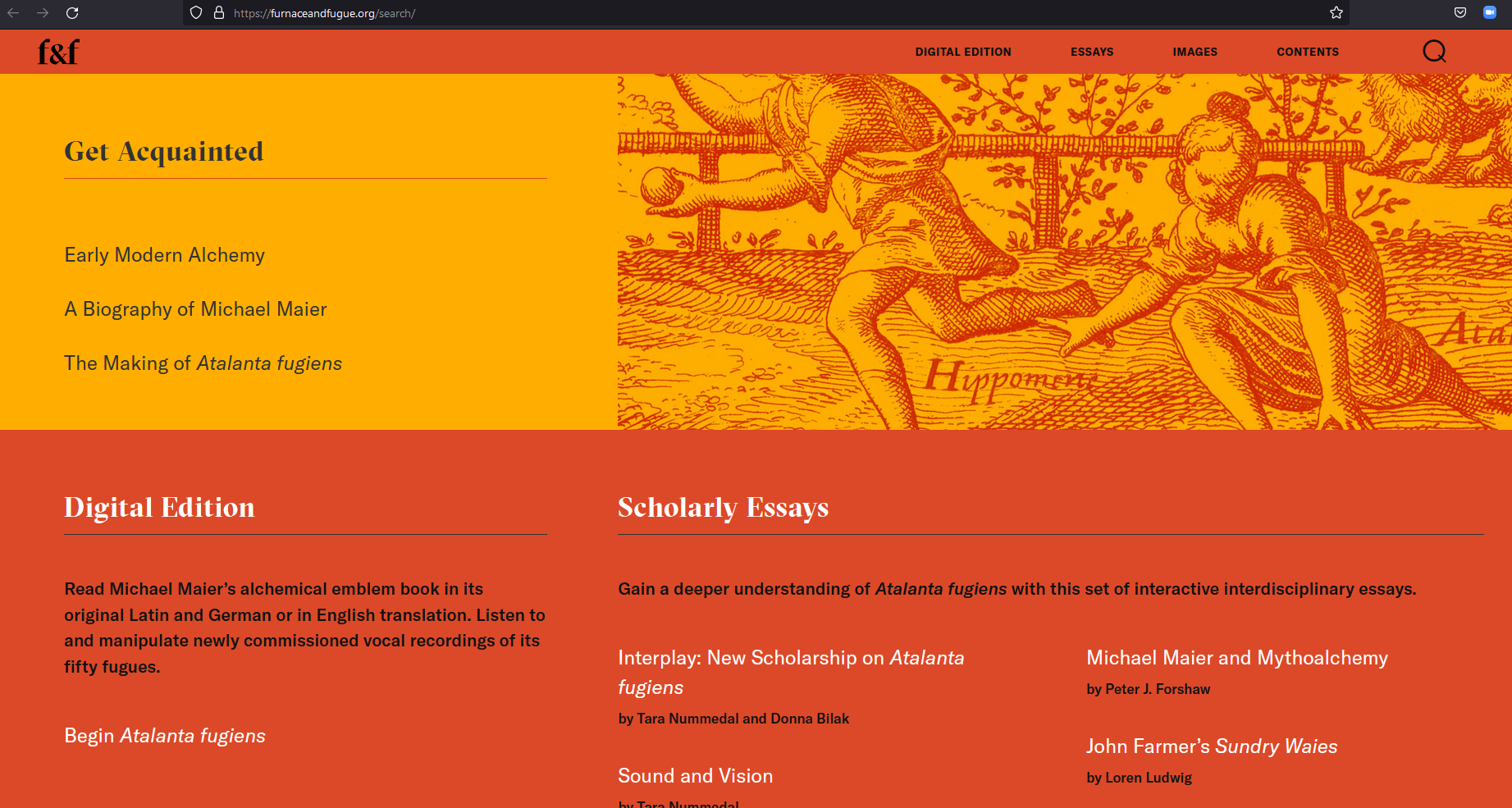
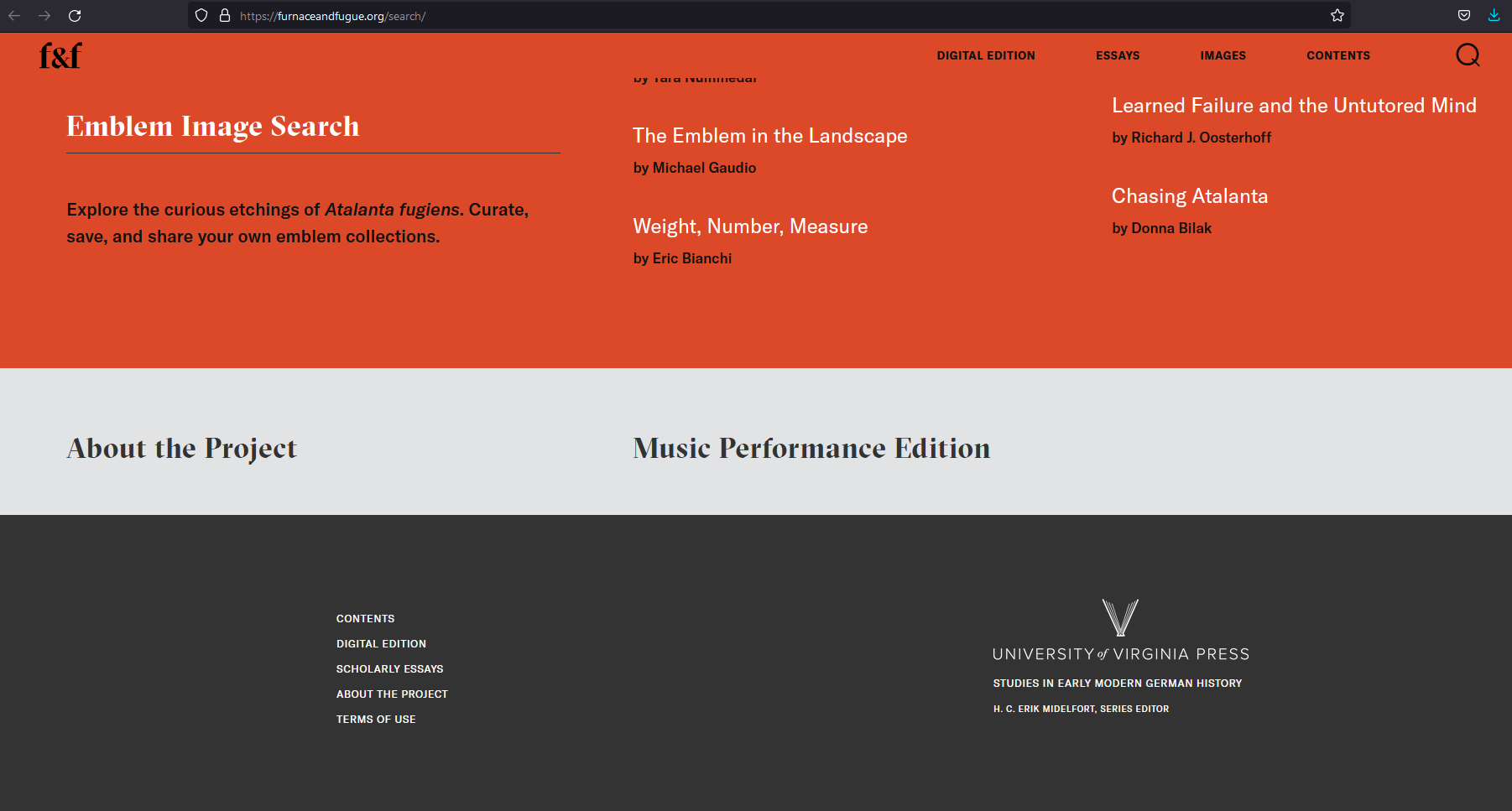
Furnace and Fugue is a project providing “A Digital Edition of Michael Maier’s Atalanta fugiens (1618) with Scholarly Commentary” (Nummedal and Bilak 2020a), the first born-digital monograph by Brown University Digital Publications (fig. 1 and 2). Eight interdisciplinary interpretative essays (Bianchi 2020; Bilak 2020; Forshaw 2020; Gaudio 2020; Ludwig 2020; Nummedal 2020; Oosterhoff 2020), including the introduction and essays by the editors (Nummedal and Bilak 2020b), along with three short introductory texts on Michael Maier, alchemy and printing (Rampling 2020; Tabor 2020; Tilton 2020), complement the edition of the emblem book Atalanta fugiens. Not only is this project unique because Atalanta fugiens is such a unique book and there has never been a multimedia edition for it before, but realising the author’s likely intentions, it is also still one of the first major digital editions in the context of alchemy research. Digital scholarly editing is not yet a common practice in the historiography of alchemy (Martinón-Torres 2011, 233), but minimal editions of TEI-encoded transcriptions of alchemical texts and their image facsimiles do exist.* First digital edition projects have already been realised in the context of alchemy research, such as The Chymistry of Isaac Newton (Newman 2009) or the Making and Knowing project (Smith 2020).* However, digital editions have not yet become a standard in alchemy research despite their unique suitedness for complex alchemical texts (Martinón-Torres 2011, 233).
Furnace and Fugue originated in co-editor Donna Bilak’s postdoctoral research at the Chemical Heritage Foundation (now Science History Institute, Philadelphia/PA) in 2013-2014, where it was further developed in a 2015 workshop and at a later 2016 Brown University workshop.* The project was finally launched in 2020 in a YouTube event.* Besides the two co-editors, Tara Nummedal and Donna Bilak, a large team contributed to Furnace and Fugue over the years.* As part of the project, a Furnace and Fugue Instagram account (@furnaceandfugue) was set up which hosted a series of posts for the 400th anniversary of Atalanta fugiens where different people (scholars and lay people alike) were invited to express their thoughts about one of the emblem images each.* The project was awarded the Roy Rosenzweig Prize for Creativity in Digital History, the funds of which are intended for the creation of a pedagogical companion website to promote public engagement with the digital edition.* Furnace and Fugue was published by the University of Virginia Press (in the series Studies in Early Modern German History, edited by Erik Midelfort) as a born-digital publication.
Atalanta Fugiens, 1617/18
Michael Maier (1568-1622) was a German iatrochymist (‘alchemist and doctor’) recognized for a number of alchemical publications in the early 17th century. Among his works, the alchemical emblem book Atalanta fugiens (1618a) stands out, as it is described as “one of the most beautiful books of alchemical literature of all time” (Figala and Neumann 1989, 49-50). Since the seminal 1969 study by Helena M. E. De Jong, Atalanta fugiens is considered the masterpiece of Maier’s oeuvre, probably because of its unusual multimedia combination of text, image, and music (Leibenguth 2002, 5-6).*
Despite the fact that the whole range of possible interpretations of Maier’s multimedia masterpiece will probably never run out,* there is consensus that Maier intended to promote alchemy in the context of courtly education and entertainment, for which emblems surely were an ideal medium.* In their introduction to Furnace and Fugue, Nummedal and Bilak state:
Maier [...] sought to elevate alchemy above its grubby artisanal roots, establishing it as a humanist, philosophical, emblematic, courtly art with the potential to access nature’s arcana. On this count Atalanta fugiens certainly succeeds, demonstrating that alchemy offered not just precious medicines or metals but also fodder for mathematical games, musical riddles, artistic virtuosity, and classical erudition. (Nummedal and Bilak 2020b)
Some have even interpreted Maier’s Atalanta fugiens as a turn away from alchemical practice to the use of alchemical symbolism for poetic ends, merely repurposing existing material from earlier alchemical compendia as his poetic material (Wels 2010, 2013). While claims have been made that Atalanta fugiens lacks practical chemistry, no detailed explanations are provided to support these assertions.* In fact, Rainer Werthmann has offered chemical explanations for several emblems within the book.* Lawrence Principe characterises the work as follows:
It can thus be seen as part of the wider tradition of apologies of alchemy in which Maier uses the poetry, music, learned play, and beautiful images of his book to link chymistry to the liberal and the fine arts. His purpose, then, is not simply to entertain readers but rather to ennoble a practice generally considered dirty and laborious by making it attractive to humanist contemporaries. [...] Atalanta fugiens is one instance of continuing attempts to address chymistry’s shaky cultural and intellectual position – an issue that plagued chymists from the Middle Ages through the eighteenth century. (Principe 2013, 176-78)*
Undoubtedly, Atalanta fugiens stands as Maier’s most extensively researched work, attracting numerous re-editions and articles written about it.* While some of these publications primarily admire the uniqueness and peculiarity of Maier’s emblems without adding new insights, others provide valuable contributions to emblem studies (Rola 1988; Gaudio 2020; Wagner 2021). Furthermore, a number of publications revolving around the topic of ‘alchemy and music’ exist, most of which at least mention Maier’s Atalanta fugiens.* Furnace and Fugue could build on the source critical work of De Jong, her English translation and contextual information as well as the Hofmeier edition with its abundant indices (Jong 2002; Hofmeier 2007; rez. Smith 2009; Tilton 2011). Beyond its multimedia aspects, Atalanta fugiens’enduring popularity was probably the primary motivation for creating an edition of this book of Maier’s rather than another. And, as the various contributions in Furnace and Fugue testify, there is still much left to be said about it.*
Digital edition overview
With its gorgeous design,Furnace and Fugue * exemplifies what Elena Pierazzo refers to as an ‘haute couture’ digital edition (Pierazzo 2019), a term to describe editions “which are tailored to the specific needs of specific scholars” (Pierazzo 2019, 209) using significant amounts of funding. The editors assert in their introduction that Atalanta fugiens had never before been discussed in such a multidisciplinary manner (Nummedal and Bilak 2020b). Furnace and Fugueallows modern audiences, perhaps for the first time, to experience Atalanta fugiens in the way it may have been intended by the author. The editors state that De Jong’s fundamental 1969 study, which focused on source criticism, deflected attention from the unique multimedia combination that is Atalanta fugiens, reducing it to a traditionally text-centered approach. Furnace and Fugue aims fill this gap and explore neglected aspects, such as the relationships between images, texts, and music, in an interdisciplinary context (). Additionally, the edition seeks to bridge the gap in knowledge between Maier’s intended audience, erudite Humanistic polymaths, and modern users. Furnace and Fugue makes Michael Maier’s unique multimedia emblem book more accessible in multiple ways: On the one hand, the scholarly articles addressing open questions of Maier research make this edition relevant for a scholarly audience (Bianchi 2020; Bilak 2020; Forshaw 2020; Gaudio 2020; Ludwig 2020; Nummedal and Bilak 2020b; Nummedal 2020; Oosterhoff 2020). On the other hand, three introductory essays on alchemy, Maier, and letter-press printing provide just enough background to let an interested public partake in the exploration of this unique remnant of early modern culture (Rampling 2020; Tilton 2020; Tabor 2020).
In the following, we will proceed to explore the project website in the order of the different options in the navigation bar (‘Digital Edition’, ‘Essays’, ‘Images’, and ‘Contents’). Clicking on ‘Digital Edition’* leads the user to a list of images, from which they can select an emblem to start with. Within the emblem overview, there is a ‘DOI’ button that copies the DOI (https://doi.org/10.26300/bdp.ff.maier) to the user’s clipboard.
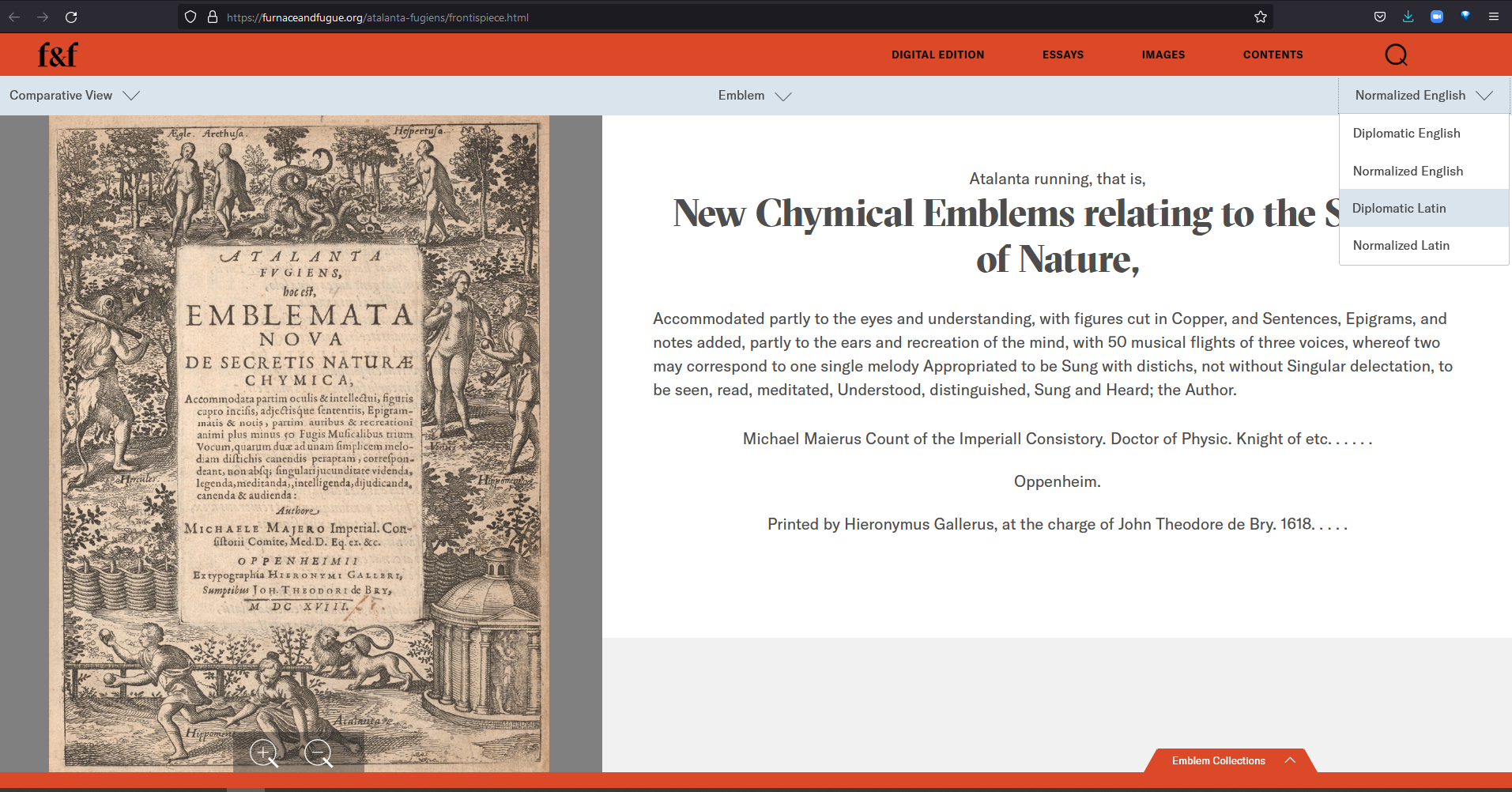
Above the emblem images, there are text links to the parts of Atalanta fugiens that do not have accompanying images, such as the title page, author’s epigram, dedication, and preface. However, from a usability standpoint, this design is not ideal as it may cause readers to overlook other parts of Maier’s text. It also hinders accessing the book in a traditional manner, where one would start from the beginning and navigate through the pages (which Nummedal terms the ‘horizontal mode’ in Nummedal 2020). Even if one clicks on the title page (fig. 3), there is no option to traverse the book in a linear fashion from the beginning.* In order to continue to the Author’s Epigram, one must either backtrack to the overview or unfold the ‘Emblem’ navigation and skip to the right until reaching the appropriate section.
Emblem/Edition view
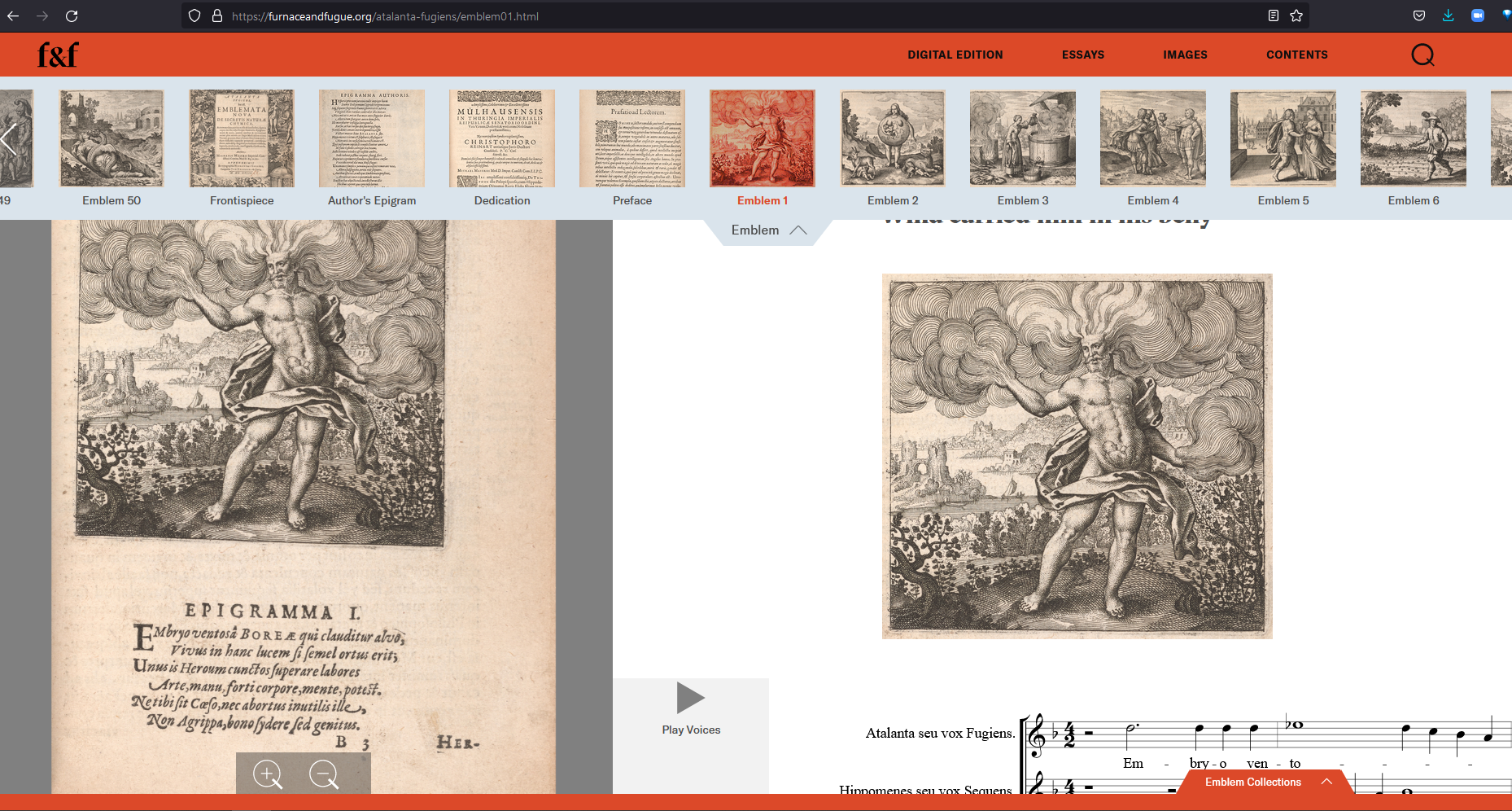
Upon selecting an emblem, users are presented with a comparative view of the digital facsimile and its transcription (fig. 4). This view includes the emblem image, an MEI viewer for the accompanying fugue (Rashleigh and Brusch 2020), as well as the normalised English text of the epigram and discourse.* Users can toggle between different viewing options, such as this side-by-side view (Comparative View), the facsimile (Original) only view, or the digital edition only (Digital Edition) view. To maintain orientation within the digital edition, users can click on the ‘emblems’ navigation at the top centre of the view, revealing a scrollbar that enables easy navigation between emblems using their respective images. Thus, users can check their position within the overall context of the book. While there is no recommended citation format for individual emblems, the URL structure is relatively straightforward.*
Personalised image collections
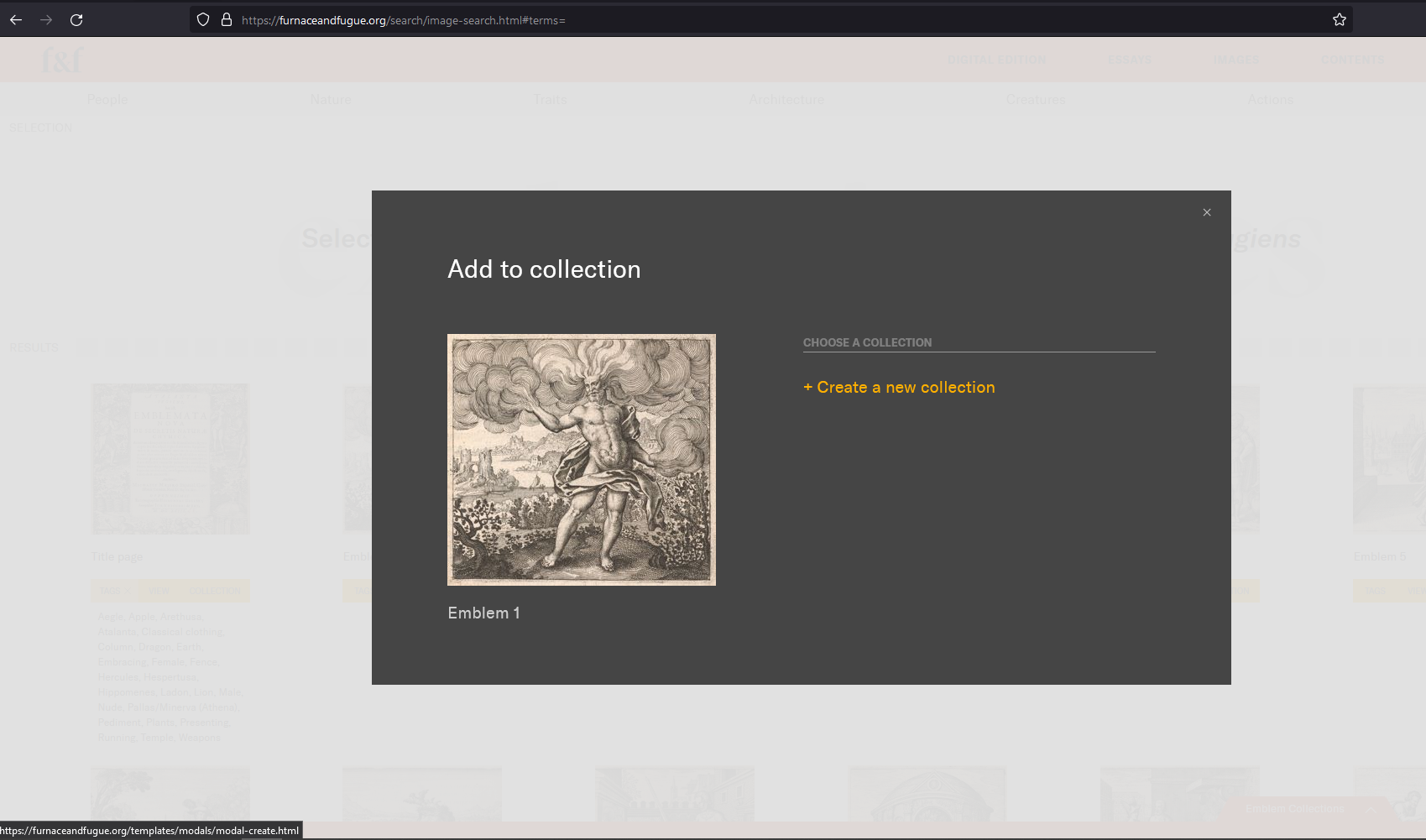
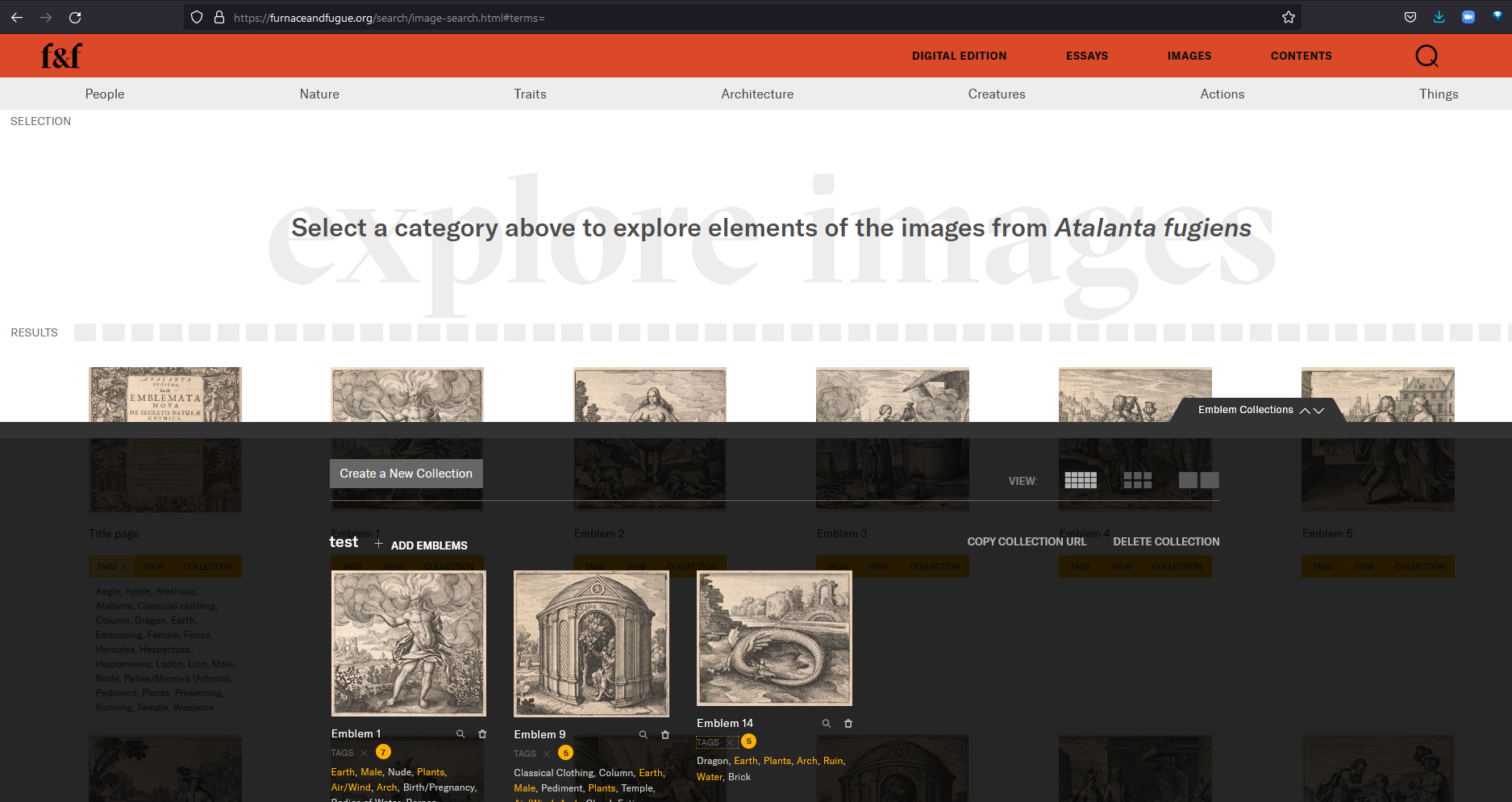
At the bottom of the window, users have the option to expand a customizable emblem collection that allows them to focus on their specific areas of interest (fig. 5 and 6). The collection can be saved or cited via a collection URL.* From a Digital Humanities perspective, these user-customizable collections are particularly noteworthy. Donna Bilak’s essay demonstrates their added value well, where one can see customised emblem collections in use (Bilak 2020).
MEI viewer/player and piano roll visualisation
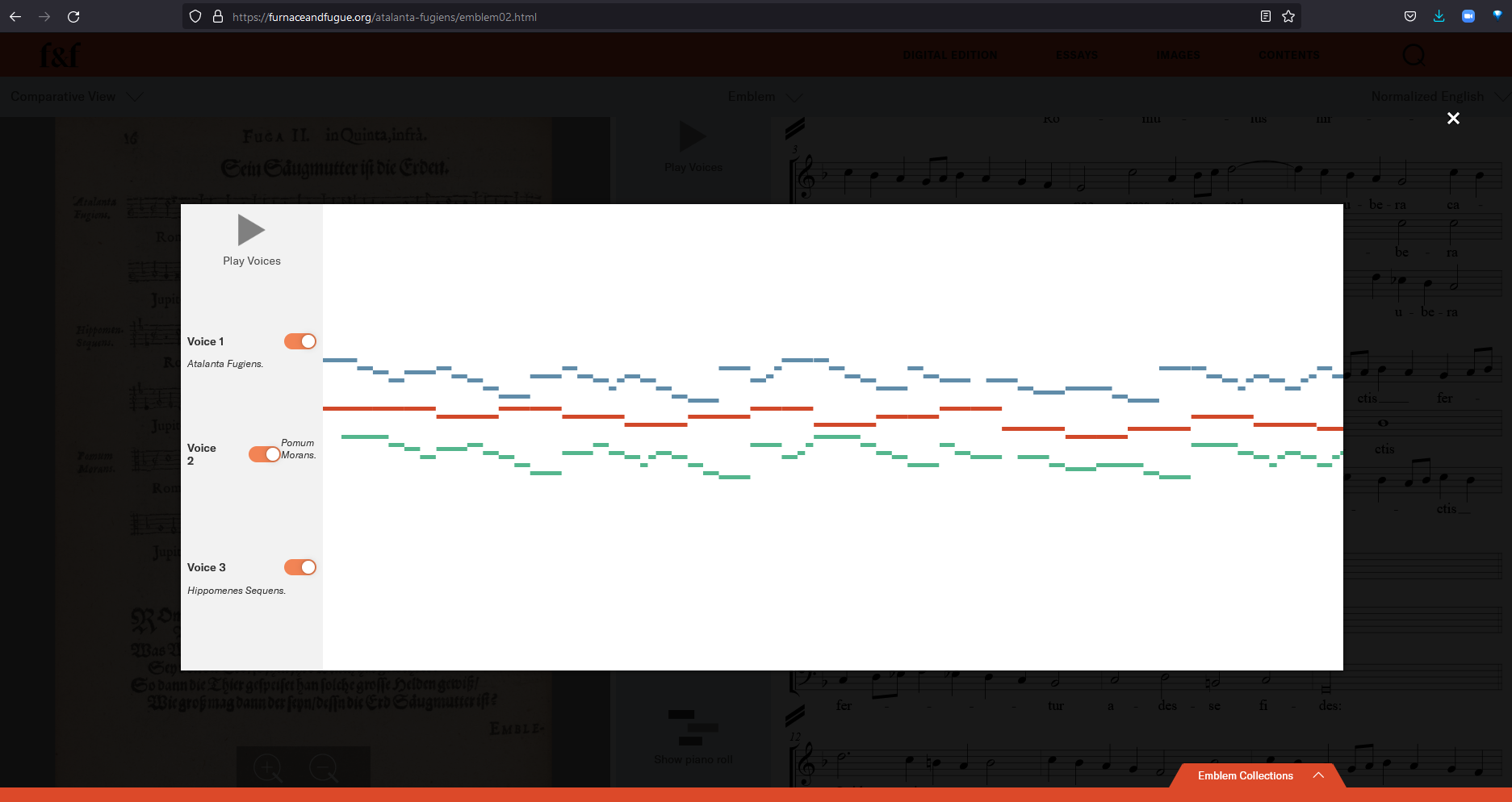
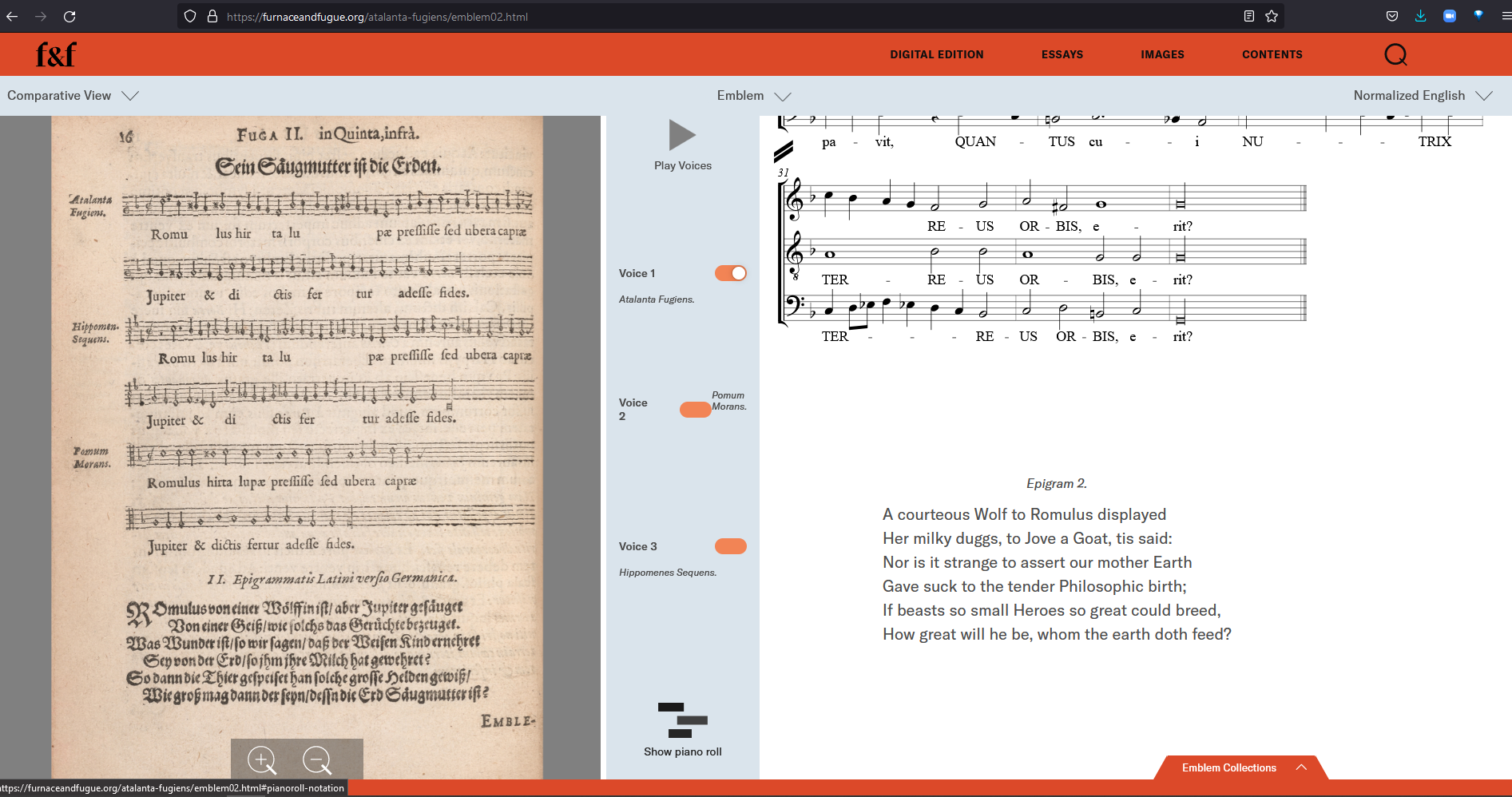
The music notation present in Atalanta fugiens was encoded using the Music Encoding Initiative (MEI), an XML standard for representing musical documents. There likely must have been a music-historical interpretation of the original scores as part of creating the edition, since the notes of the digital edition are not the same as in the historical book. The Verovio-based MEI viewer (fig. 7) enables readers to play and manipulate the music of the fugue by isolating certain voices (Rashleigh and Brusch 2020). The web MEI player aims to engage musicologists and non-musicians alike, providing visual note highlighting synchronised with the music playback. Users can isolate different voices and utilise a piano roll visualisation to grasp the melodic and imitative structures that constitute the fugues, which hold significance in relation to Maier’s alchemical interpretation of his multimedia book. This approach allows users who are less familiar with music notation and theory to comprehend the ‘message’ and visual flow of the fugues, including the interrelationships between different voices, as intended by Maier, who designed the music to add a layer of dimension to his text so that readers could meditate on the musical theory in conjunction with the text and emblematic images (fig. 8).
The music notation was transcribed using the Sibelius software and converted to MEI using the Sibelius-to-MEI plugin. Subsequently, the resulting MEI/XML required adjustments for timing extraction using XSLT, which generated a table of MEI elements and their respective timings using the Verovio JSNode script. This step was necessary due to the inherent imprecision in human musicians’ performances compared to the exactness of the music notation in MEI/XML. To achieve smooth synchronisation between a viewer and a recording of human voices based on ideal durations from the sheet music, data had to be adapted to account for these discrepancies. Common Music Notation (CMN), an open-source format for hierarchically describing and rendering musical scores as images, was also created using Verovio on the command line. The Common Music Notation in SVG and the MEI table with timings were then assembled and inserted into the HTML template. Thus, “the project modernised the polyphonic fugues into animated notation that is playable in a web browser” (Rashleigh and Brusch 2020).
Image view
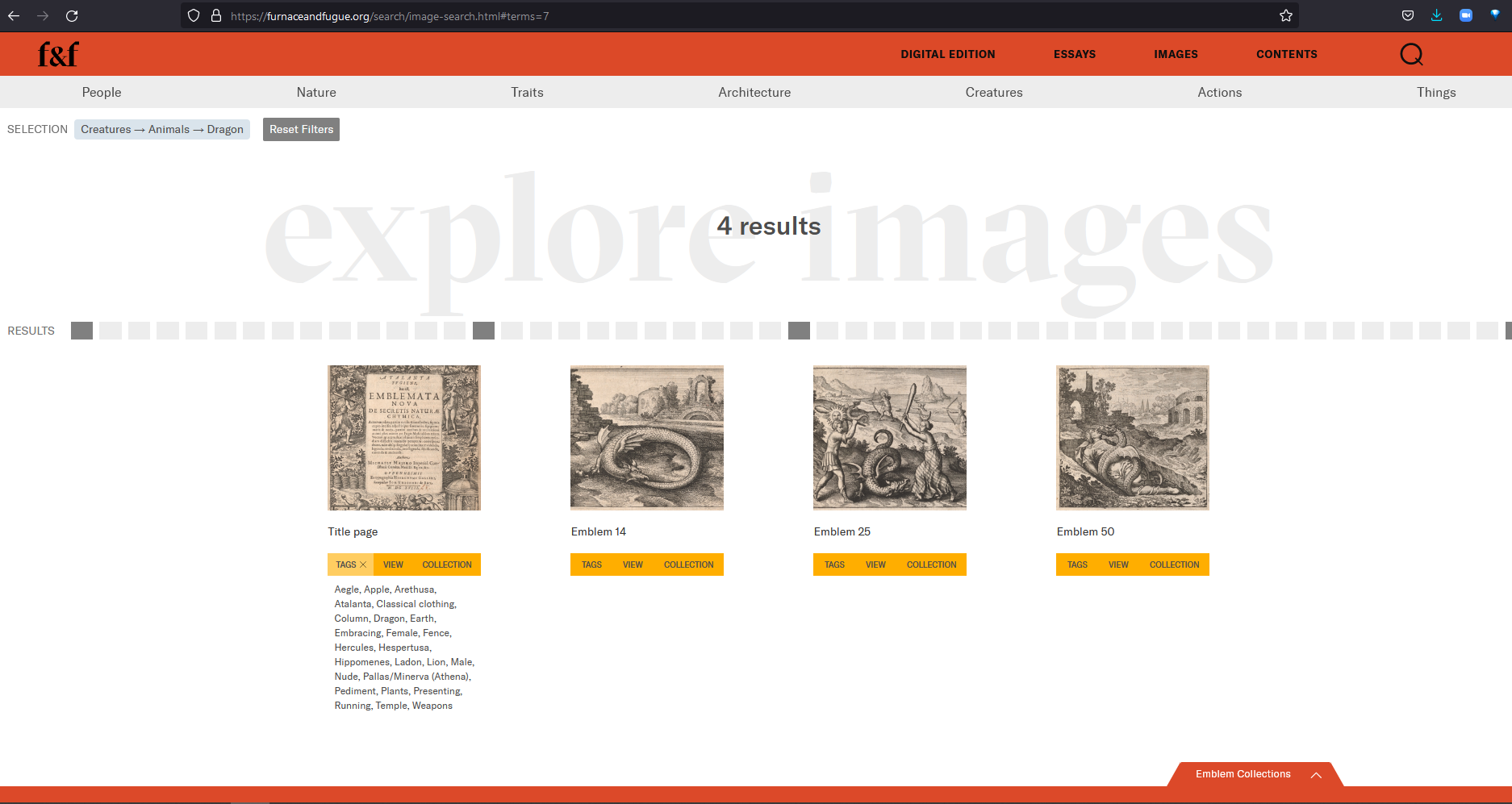
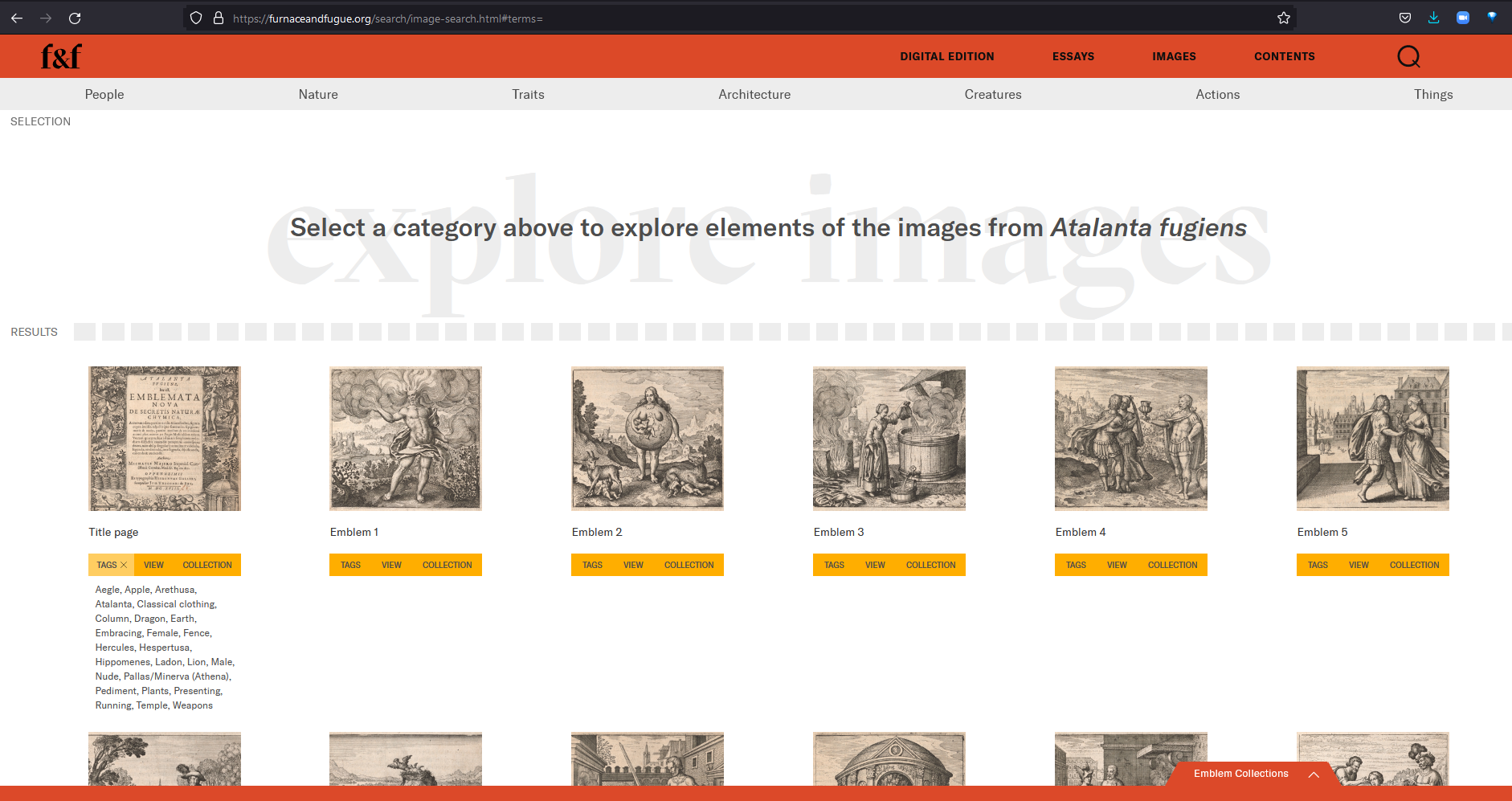
By clicking on ‘Images’ in the navigation bar, users are directed to the image search functionality (fig. 9 and 10).* This feature provides a faceted search with categories such as ‘People’, ‘Nature’, ‘Traits’, ‘Architecture’, ‘Creatures’, ‘Actions’, and ‘Things’.
Each category provides corresponding options for selecting emblems. Once the search results are displayed, users can choose to display the emblem tags or to jump to the emblem view.* Additionally, there is a shortcut to add emblems to personal collections. Notably, the emblems of Furnace and Fuguedo not seem to be included in existing emblem repositories or research engines such as Emblematica Online. Integrating them into such a resource would allow for a broader comparison of motives beyond Atalanta fugiens. In a project by the Herzog August Bibliothek Wolfenbüttel, IconClass tags were created specifically for alchemy (IconClass 49E39) which could have been reused here to enhance interoperability between alchemy projects.*
The text
Furnace and Fugue includes a transcription of a 1618 edition of Atalanta fugiens as well as an anonymous 17th century English translation (Mellon MS 48, which will be discussed later).* The TEI files contain detailed metadata, transcriptions, and the markup of personal names but no editorial interventions in the stricter sense.
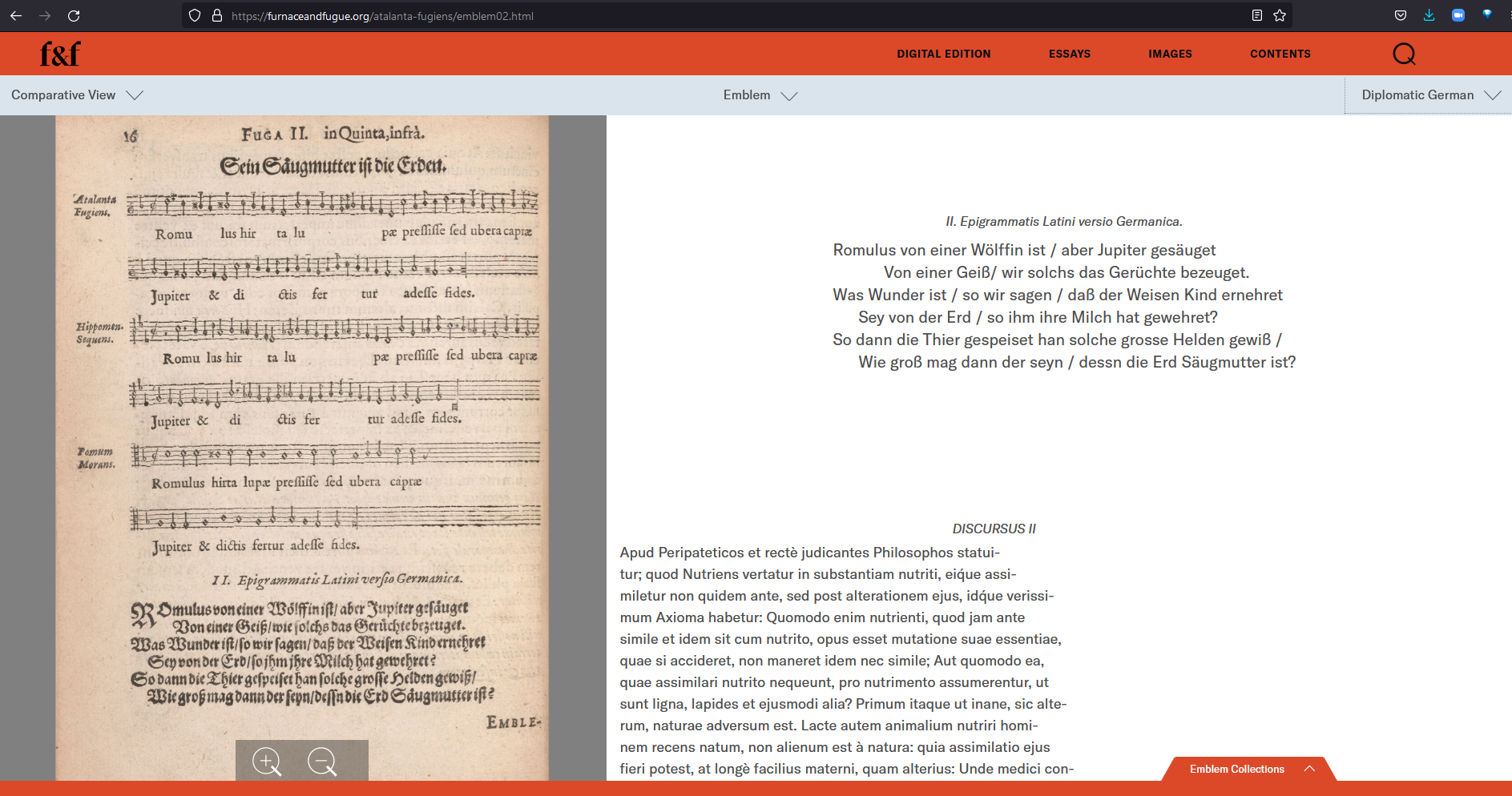
On the right-hand side, users can choose between different text versions, including Diplomatic English, Normalized English, Diplomatic Latin, Normalized Latin, and Diplomatic German (fig. 11). This makes the edition very user-friendly, intuitive, and ‘non-threatening’ to users unfamiliar with edition practices and conventions. However, it has the serious drawback of silently presenting the reader with a historical translation without explicitly declaring it as such and which is made unrecognisable as such at first glance because the normalised view is served to the readers by default.*
Thanks to the availability of normalised Latin, which can be generated from the TEI/XML downloadable via GitHub, one can easily feed the text into Natural Language Processing Pipelines, thereby offering data that can be reused in future Digital Humanities research. Named entities are marked up in the TEI data as well as in the image search JSON, which powers the semantic search. However, many entities (such as <persName>) marked up in the detailed TEI encoding, which also references the images, are not accessible to users within the edition itself. The TEI files are of high quality and could be reused in future projects to create a critical edition with word-level commentary.
The historical translation provided in Furnace and Fugue
Due to its beautiful design, accessibility, and the lasting pop-cultural fascination of Atalanta fugiens, Furnace and Fugue is likely to attract a non-scholarly audience, who may not be aware of the potential pitfalls of re-using historical translations uncritically. The way the anonymous 17th century English translation from Mellon MS 48 is presented at this time, the historical translation is mostly in disguise: users need to actively look for information on the provenance of the translation in order to learn more about it. Most non-scholarly users of the edition are unlikely to undertake this investigation. The fact that the translation is a historical text of its own, requiring contextualisation, may even escape audiences who are theoretically aware of these issues because it is disguised behind the normalised reading version which appears as a default.
Early modern translations are liberal renderings rather than trustworthy translations in our sense of the word. Translators are known to alter meanings or details to accommodate their own interpretation of the source text or alchemical theory – as Maier himself has done in his own vernacular-to-Latin translation of Basil Valentine’s Twelve Keys(Maier 1618b; Principe 2013, 153). Translations can be influenced not only by the limitations of expressing certain concepts in exactly the same way in multiple languages, but they can also be heavily influenced by the authors’ own views, their time, cultural contexts, and their own interpretations of the subject matter. Moreover, when historical translations are used without extensive editing or commentary, readers who are not well-versed in the target languages may overlook deficiencies in the translation. This is apparent, for instance, in a 17th century English translation of Michael Maier’s Viatorium (1618), where the translator evidently glossed over portions they did not fully comprehend, without acknowledging their likely uncertainty regarding the translation’s accuracy (McLean 2005). It is plausible that such a translation represents an initial or rough draft, where the translator did not invest significant time, effort, or care. Assessing the quality of such a translation in detail is challenging without conducting a word-by-word translation oneself. While a vague translation can offer readers an overview of the content of a Latin work, it is important to recognise that it is likely to contain errors or inaccuracies in the finer details. Many times, such historical translations, instead of making the meaning easier to grasp for a modern reader, obscure it even more, introducing additional room for misunderstandings of the message intended by the original author. Even if the translation of Atalanta fugiens used in Furnace and Fugue were substantially better than the aforementioned example, it would still not be an ideal choice from a scholarly standpoint and one would expect more critical engagement with this fact. In a field like the historiography of alchemy, where details can be crucial, the use of a potentially flawed 17th century translation is debatable to say the least, particularly if it is not clearly declared as such.*
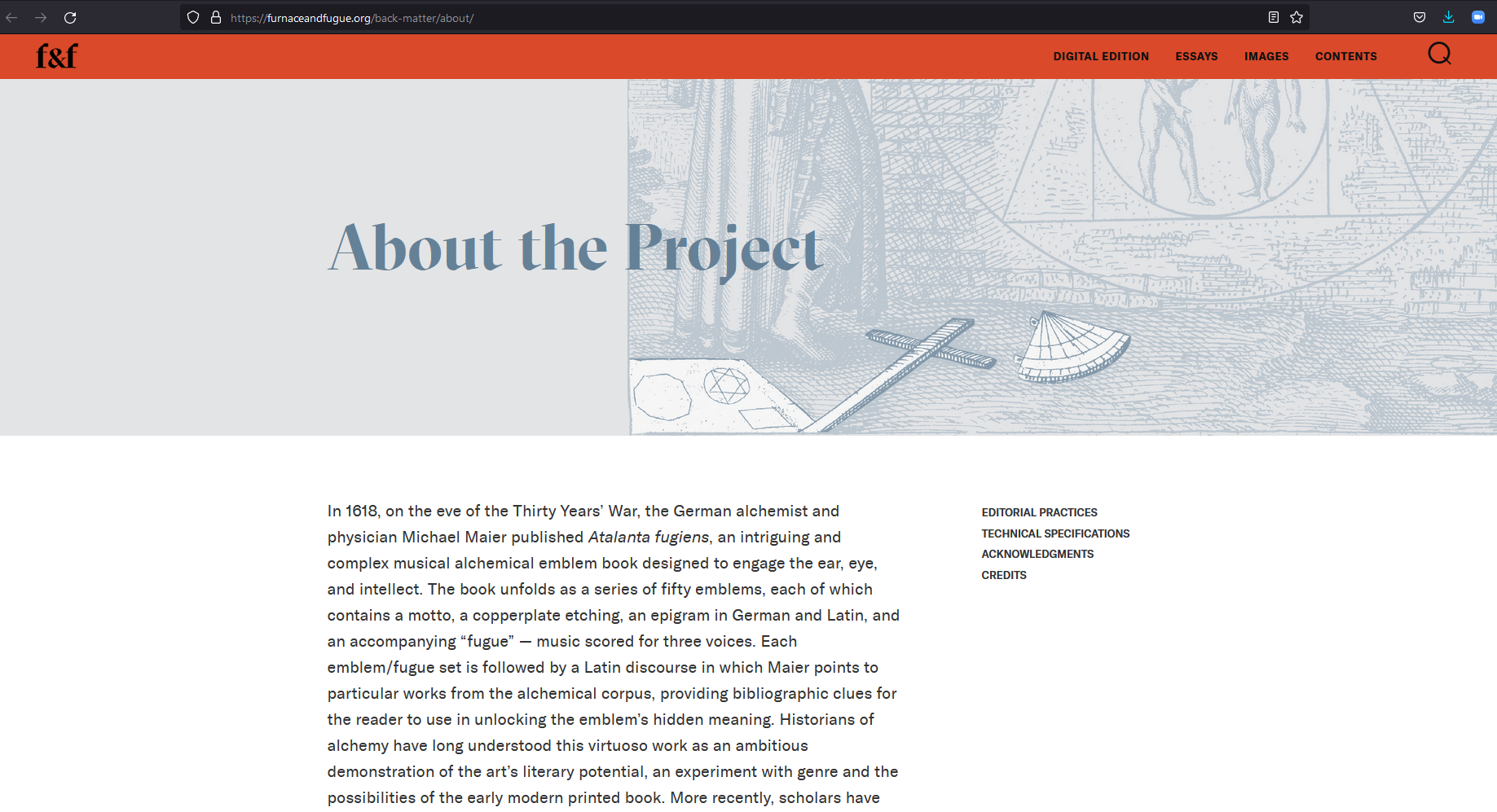
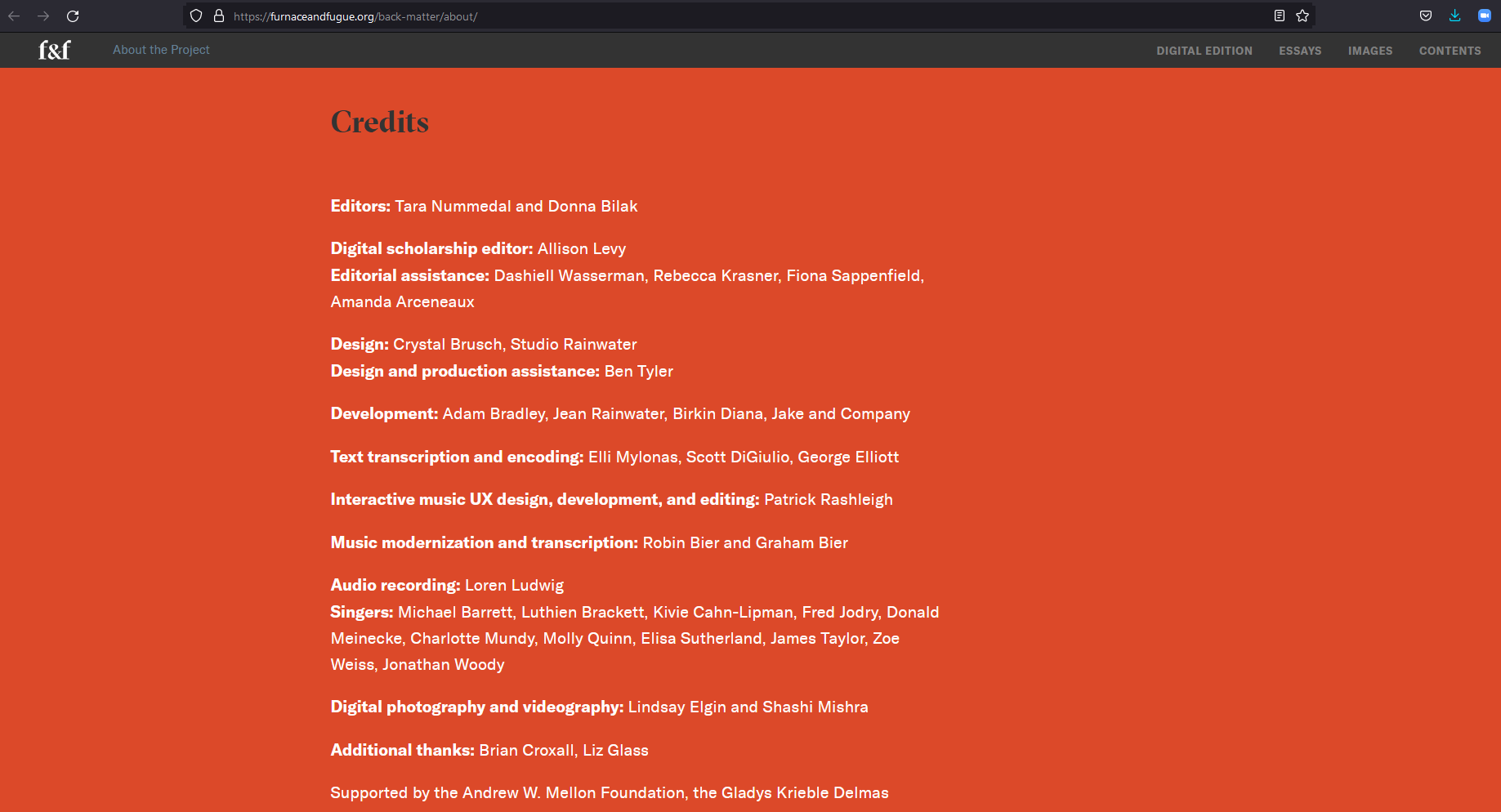
As stated in the backmatter (fig. 12 and 13), “the Beinecke manuscript [the anonymous 17th-century English translation from Mellon MS 48] is a fascinating document in its own right and merits further research; however, the objective of Furnace and Fugue is not to provide a study of the Beinecke manuscript itself but rather to provide a reliable English translation of Maier’s Latin text” (Nummedal and Bilak 2020a).* Yet how can those two aspects, both being a historical document which merits further research but also providing a reliable translation, be reconciled? The editors encourage curious readers to explore the Beinecke manuscript, but how can readers unfamiliar with textual criticism be expected to make anything of this text without further contextualisation? Can a historical document that merits further research ever be a reliable source, especially given the complexities of alchemical language? This relatively uncritical engagement with the source materials is a weakness of Furnace and Fugue. It is an acceptable decision to not put special focus on the interpretation of the Beinecke MS but it should at least have been contextualised in a way that makes users of the edition aware of its nature and the problems this might entail.
To address this issue, an easy-to-find, clearly visible note should be added to highlight the frequent unreliability of historical translations and the reasons why they have to be used with caution. The lack of a critical edition and the debatable use of a historical translation were also remarked upon in the much shorter format of Reviews in DH(Bielak 2021).* As it stands, the translation might lead some to assume incorrectly that this translation was produced throughout the Furnace and Fugue project according to modern translation standards. The authors could have opted to present the diplomatic translation as a default, as its wording immediately denotes it as a historical document. A button to ‘Switch to reading version’ would make it even more obvious. Alternatively, an information box could provide this vital context and explain the implications for the translation’s accuracy and trustworthiness. A suggested citation could highlight the translation’s provenance from a historical source. None of these issues is a dealbreaker and they can be addressed through minor adjustments to the edition. I propose providing a more detailed explanation of the historical translation in the edition guidelines found in the back matter or about page, accompanied by a prominently displayed popup button or similar element near the text itself in the emblem view.
Scholarly essays
Three introductory essays (Rampling 2020; Tilton 2020; Tabor 2020) make Furnace and Fuguea very well-rounded resource for audiences unfamiliar with the historical context of Atalanta fugiens. The scholarly essays that represent the scholarly engagement with Atalanta fugiens within Furnace and Fugue will be discussed in the following paragraphs (Bianchi 2020; Bilak 2020; Forshaw 2020; Gaudio 2020; Ludwig 2020; Nummedal and Bilak 2020b; Nummedal 2020; Oosterhoff 2020).
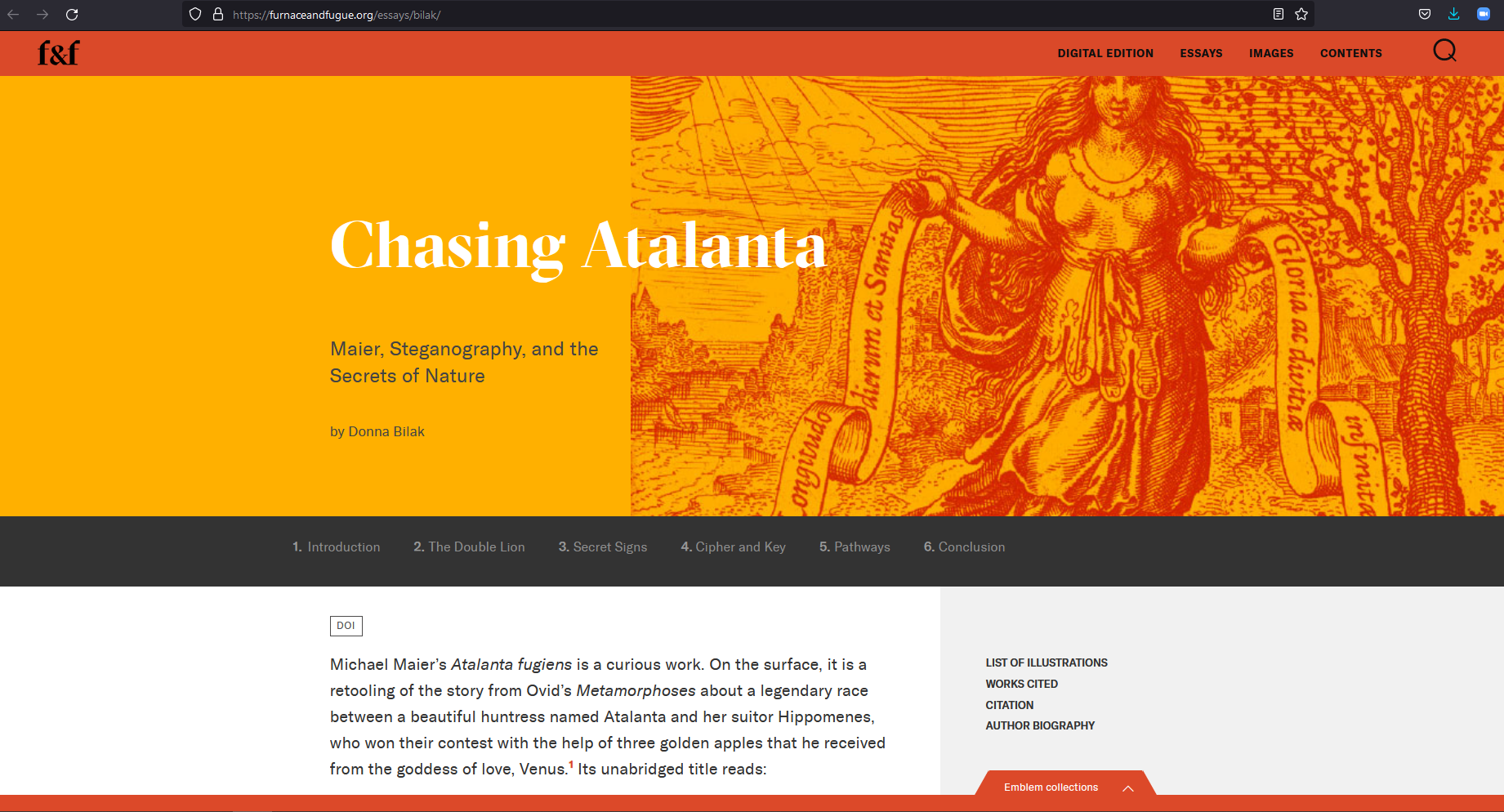
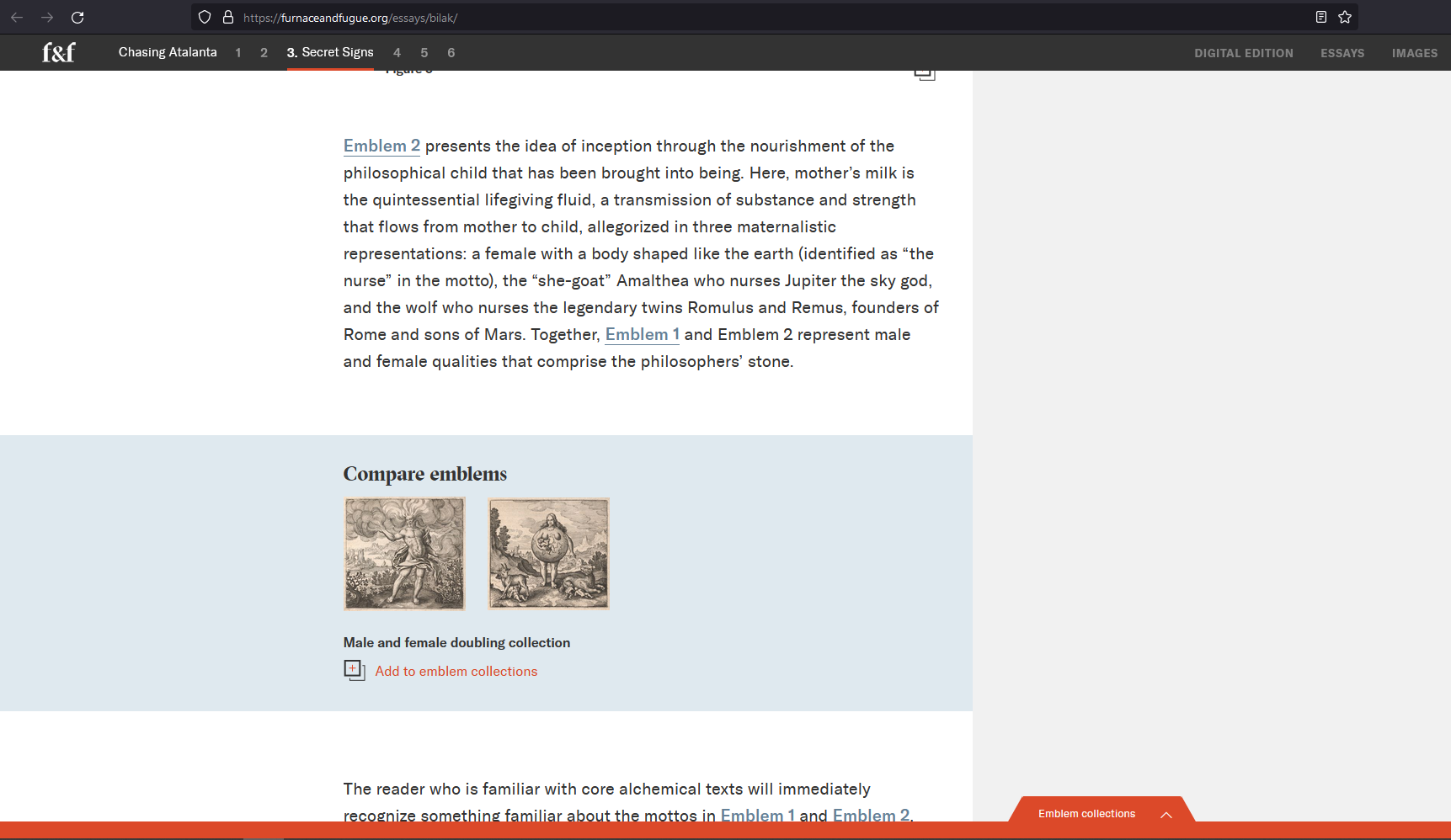
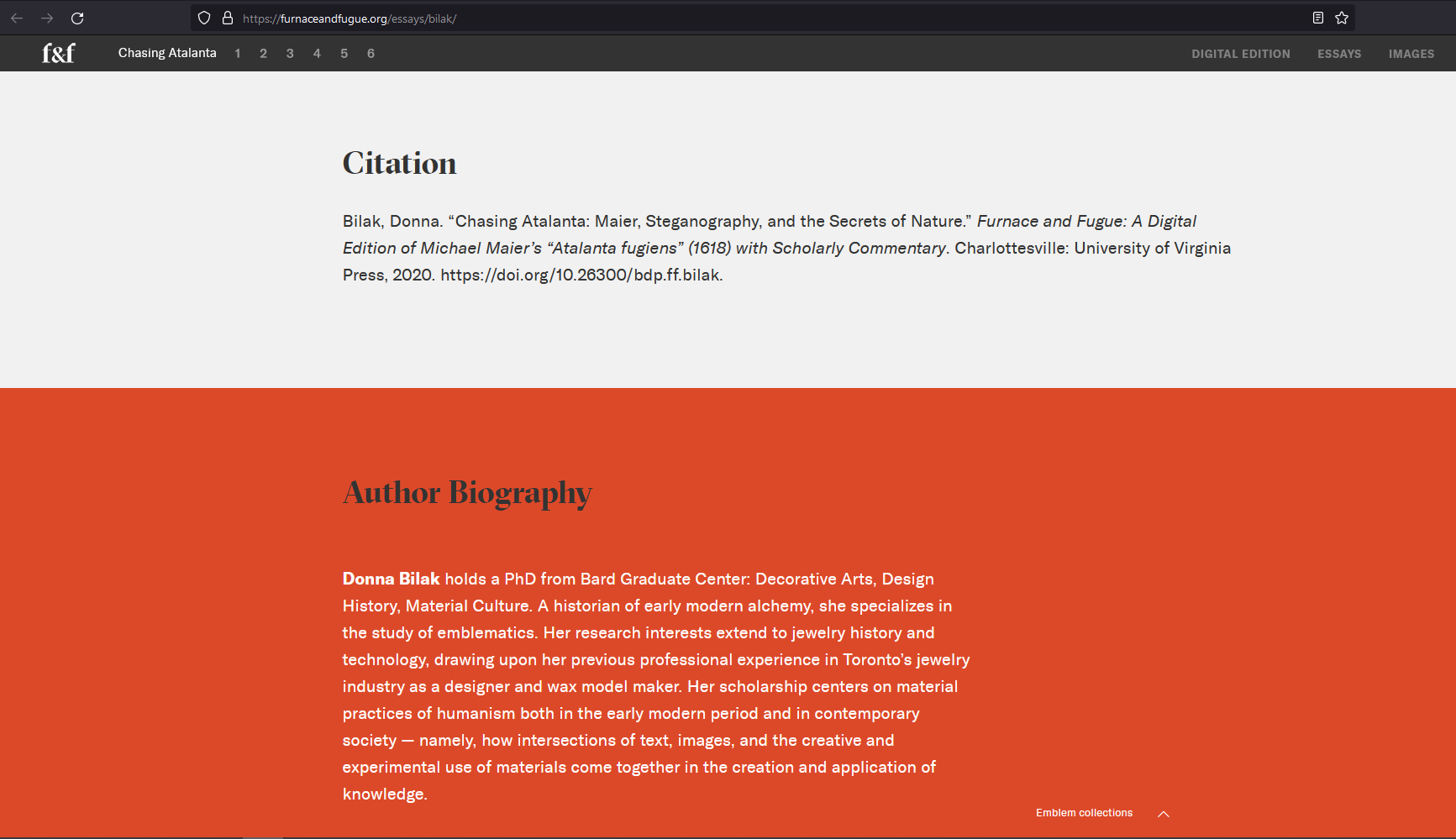
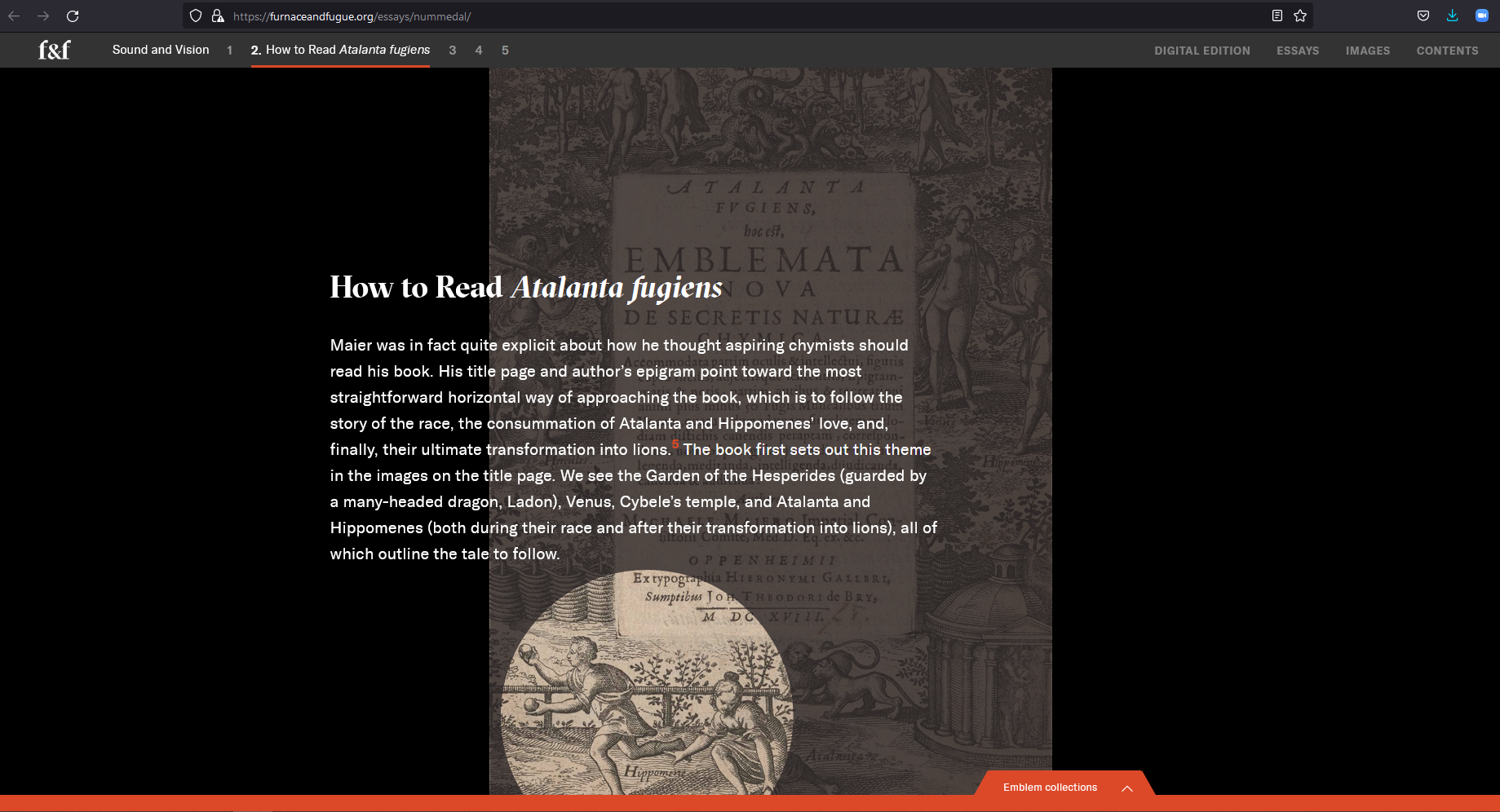
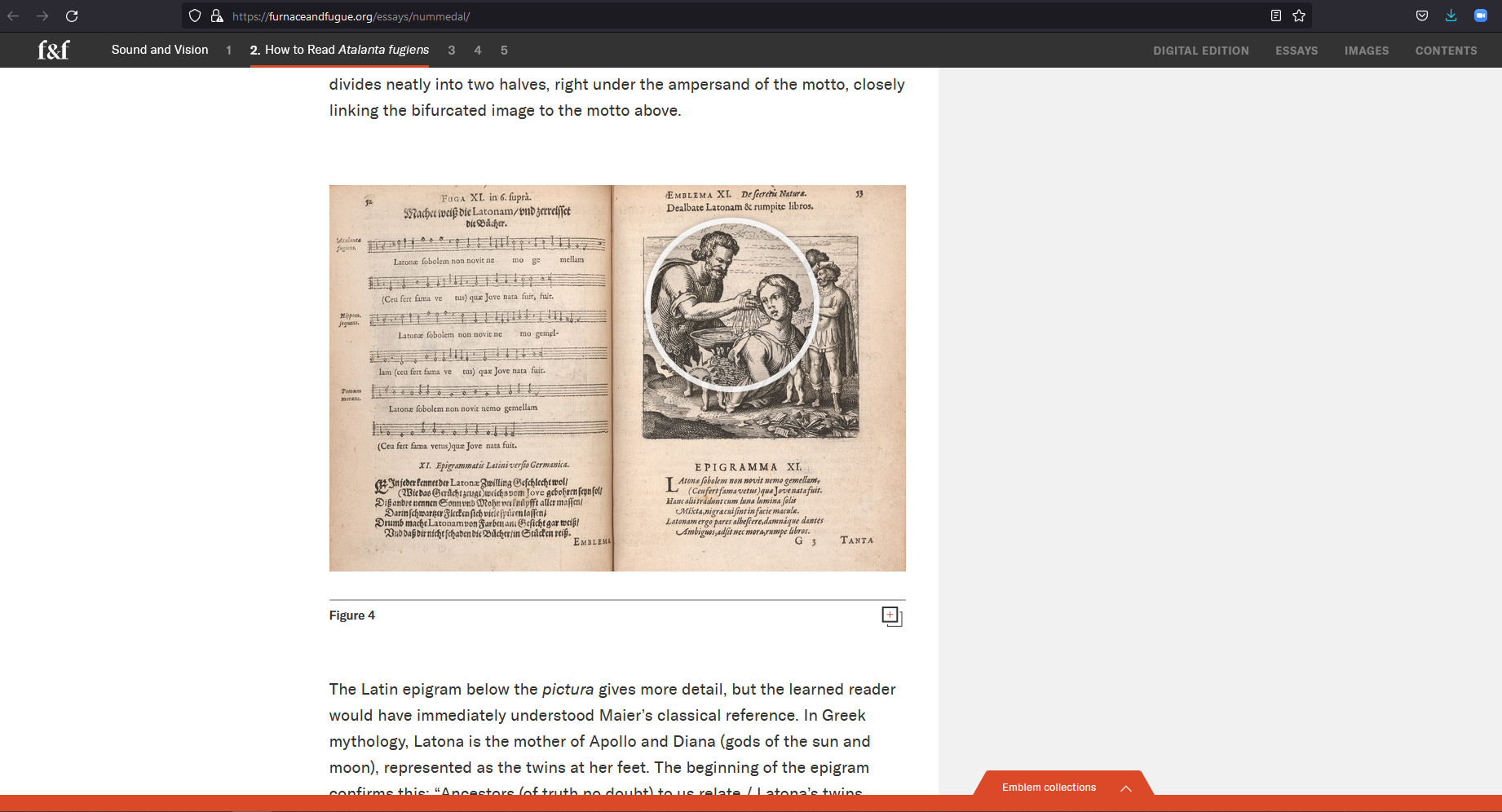
Donna Bilak frames Atalanta fugiens as a case of playful encipherment typical of early modern courtly entertainment (fig. 14, 15, and 16): She argues that the fifty emblems can be interpreted as a magic square following Agrippa of Nettesheim’s writings (Bilak 2020). Michael Gaudio examines the landscapes depicted in the background of Merian’s etchings, interpreting them as a commentary on the measurement of nature, thereby inviting users of the book to look more closely (Gaudio 2020). Tara Nummedal interprets Atalanta fugiens as a reflection of Maier’s perspective on different types of reading (fig. 17 and 18): Atalanta fugiens invites readers to engage in both the ‘horizontal mode’, i.e. quickly turning pages and viewing the emblems in context, but also the ‘vertical mode’ encouraging in-depth study of individual pages and thereby engaging different modes of meaning-making. The digital edition reflects this theory in the affordances it offers to its users (Nummedal 2020).
Richard Oosterhoff discusses allusions to mathematics such as the squaring of the circle in Maier’s earlier tract De Circulo Physico Quadrato (1616), explaining it as a problem that cannot be solved by theory alone, but only by a practitioner able to combine ‘ratio’ and ‘experientia’,highlighting the importance of practical expertise alongside theory. Craftsmen are, as Maier suggests, ‘squaring circles’ all the time in their everyday practice by approximation while the problem remains unsolvable to theorists. Maier likely means to insinuate that the same is true for gold-making, framing it as a solution that is theoretically knowable, just not yet known, exactly like Aristotle had framed the squaring of the circle (Oosterhoff 2020). Peter Forshaw discusses Maier’s mythoalchemy, comparing his mythoalchemical text Arcana Arcanissima (1614) with the mythoalchemical emblems of Atalanta fugiens (Forshaw 2020).
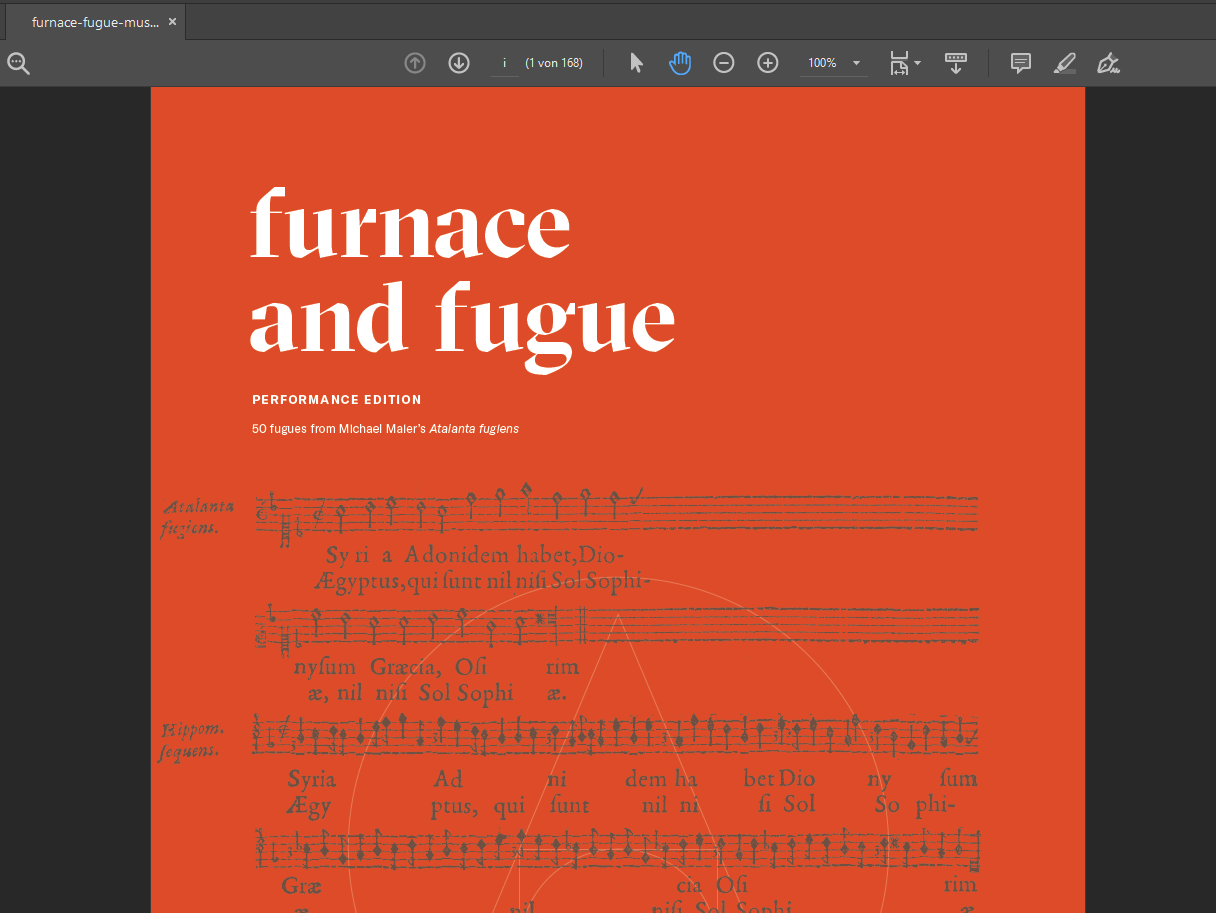
The most groundbreaking revelation in Furnace and Fugue is that forty of the fifty fugues were copied from John Farmers Divers & Sundry Waies (1591), as Loren Ludwig demonstrates (Ludwig 2020). Contrary to the original assumption that Maier composed most of the fugues himself, this discovery places Atalanta fugiens in the reception line of an English crypto-catholic liturgical tradition but also raises questions about the role of the fugues in Maier’s overall work. While a crypto-catholic intention does not seem likely given Maier’s otherwise undoubtedly Lutheran faith, the reuse of those fugues underscores Maier’s belief in music as an alternative, yet equally suitable transmission medium for secret knowledge, be it spiritual or alchemical. Furthermore, Eric Bianchi suggests in his essay that Atalanta fugiens is unlikely to have been intended for performance but rather as an invitation to silent contemplation in the context of contemporary music theory – an ideal that Maier later realised in his Cantilenae Intellectuales (1622). Bianchi further notes that composing music and possessing theoretical knowledge of music theory were markers of belonging to the courtly elite, the intended audience for Maier’s book, unlike playing music which was the task of skilled artisans (Bianchi 2020). Nonetheless, Atalanta fugiens can certainly be performed, as demonstrated by the music player in the digital edition and the performance edition (fig. 19) created in the Furnace and Fugue project (Nummedal and Bilak 2020a).*
While these contributions significantly enhance current research, particularly the insights regarding Maier’s fugues, central questions concerning Atalanta fugiens remain unanswered to this day, such as the absence of a critical edition or a chemical commentary.* Although the project’s title does not explicitly promise a critical edition, the phrase “digital edition with scholarly commentary” (Nummedal and Bilak 2020b) may lead readers to expect an apparatus-style commentary rather than scholarly essays.
Footnotes in the scholarly essays
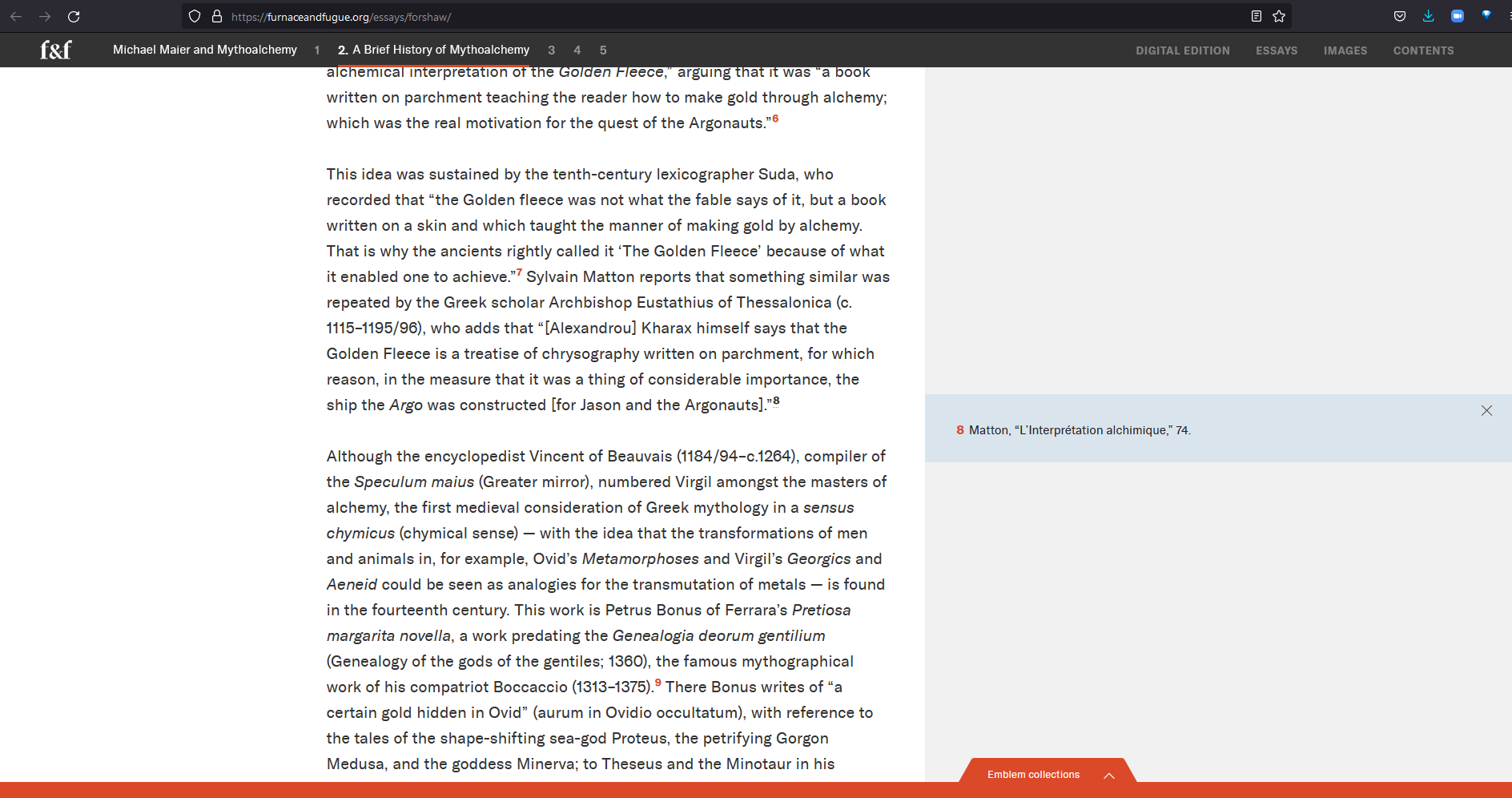
By default, footnotes inFurnace and Fugueare hidden and are also excluded from the printed PDF version. Users can only access them by clicking on each one individually to look up its contents (fig. 20).
Usability and design decisions significantly impact how users engage with resources by providing certain affordances (Norman 2013). A digital scholarly edition should allow for the critical examination of sources, both primary sources and those referenced in scholarly articles. Making it difficult or cumbersome to open up all the footnotes, requiring individual clicks on each footnote, creates a user experience that discourages active engagement with footnotes. A scholarly edition should never discourage critical and scholarly engagement with the sources represented in it, no matter the gain in usability or the improvement in design or beauty.
To address this issue, I recommend supplying a ‘display all footnotes’ button or providing a PDF version of the articles that includes all footnotes.
Contents and search bar
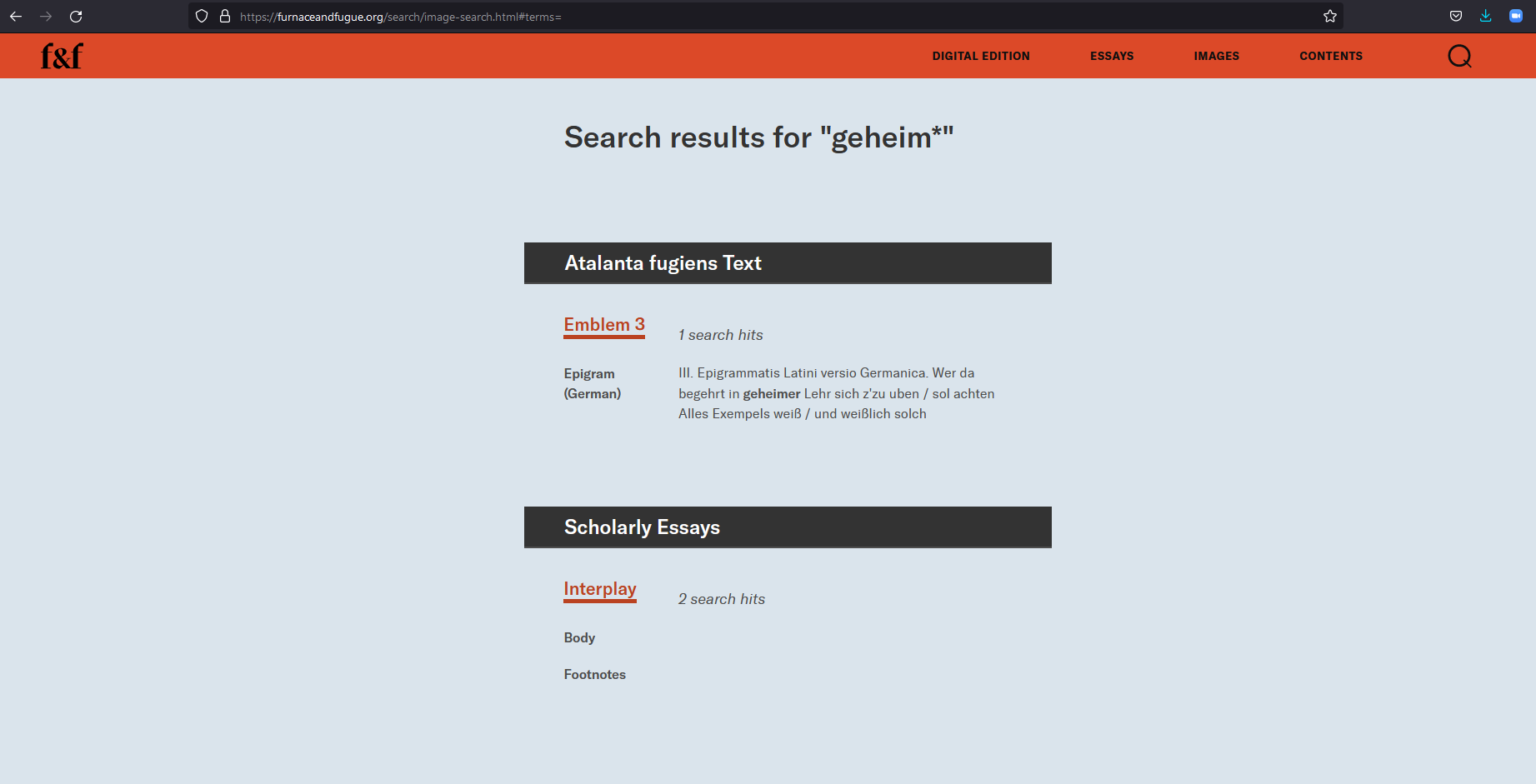
The search bar allows for full-text searching of all elements of the project, that is the scholarly essays as well as all versions of the digital edition (fig. 21). For instance, a fuzzy search for ‘Hesperid*’ (including a wildcard) yields results in ‘Discourse (Latin)’ and ‘Discourse (English)’ in Emblem 14, 22, and 25 as well as one result for ‘Discourse (Latin)’ in Emblem 50. Moreover, the term appears in both the body and footnotes of Peter Forshaw’s scholarly essay and in the body of Bilak’s essay. Notably, the full-text search also encompasses ‘Diplomatic German’, as evidenced by searching for ‘geheimer’, which yields one result in ‘Epigram (German)’ in Emblem 3.
Backmatter/about
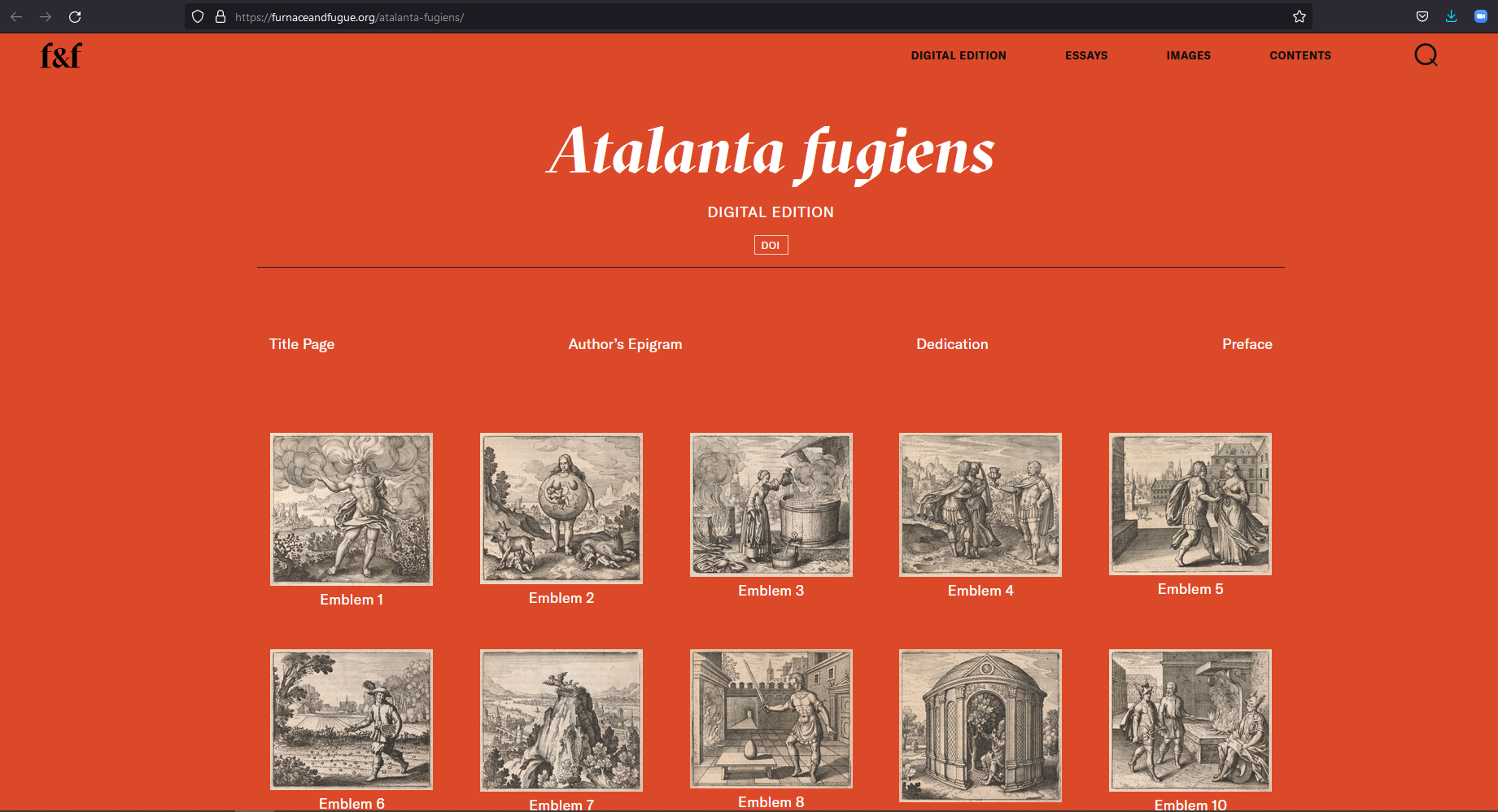
The backmatter/about page provides ample documentation on internal aspects of the project, such as technical implementation, editorial practices, project contributors, and their roles. It also acknowledges funding and covers the project’s timeline from 2015 to 2020, which encompasses its development, implementation, and subsequent publication. A DOI citation is available, but it is somewhat difficult to find in the edition, as it is displayed only when navigating to the overview view of the book (fig. 22).*
Technical implementation
The backmatter/about site does not address the project’s digital sustainability. The majority of the content focuses on editorial guidelines and acknowledgments. The XML source data and code for the website creation are provided through a GitHub repository, allowing for data reuse. However, this approach may pose a risk to long-term archiving and sustainability, as relying on a proprietary platform like GitHub could result in potential data loss or discontinuation of services. It would be preferable for a non-commercial institution to ensure the long-term sustainability of the data.* In total, there are four GitHub repositories containing all project data and code, with the ‘atalanta-media’ repository appearing as the most suitable point of access.* Notably, there are no GitHub releases or data publications on Zenodo archiving parts of the edition.
In terms of technical implementation, Furnace and Fugue employs a custom static site generator, presumably developed as part of a broader digital publishing initiative at Brown University. However, the rationale for not utilising existing tools for this purpose is not provided. While the use of plugins and JavaScript libraries (e.g., Waypoints, GreenSock Animation API (GSAP), GSAP ScrollToPlugin, Tumult Hype Pro, ScrollMagic) enhances the user experience, there is no explicit consideration of the project’s long-term sustainability. This concern extends to archiving and publishing data on GitHub, which may be subject to disappearance, as well as the JavaScript libraries that tend to become outdated relatively quickly. The aforementioned information represents the extent of the documentation regarding technical implementation, with more detailed information promised on the ‘atalanta-code’ GitHub repository, which, upon inspection, does not seem to contain such documentation.
Data provided on the ‘atalanta-media’ GitHub are: TEI/XML for Atalanta fugiens, 1618 (in Latin and German), TEI/XML for Atalanta running, that is, new chymicall emblems relating to the secrets of nature (English), MEI/XML for the 50 fugues, WAV audio files for the 50 fugues in three voices, JSON image search terms for the 50 emblem images and frontispiece as well as JP2 image files for Atalanta fugiens, 1618 which link to the Brown Digital Repository (Olio).* Everything except the JP2 images is hosted on GitHub repositories, i.e. a version control system for working code, not digital repositories meant for long-term archiving.* The TEI files are available from the project’s GitHub repository and include detailed <teiHeader> metadata as well as, for example, the markup of personal names using <persName>.* With the last GitHub edits in 2020, the project seems no longer to be under development. It is unclear whether the project will be actively maintained and who is the responsible party, if any, and the manner in which it will be done remains unclear, although it could be presumed that the Brown Digital Publishing Initiative may assume responsibility.
Furnace and Fugue and digital editing practices
Part of the Brown Digital Publishing Initiative, Furnace and Fugue serves as a commentary on generating reputation, trustworthiness, and credibility in digital publishing, particularly within the context of digital scholarly editions. It combines practices from both digital scholarly editions and digital scholarly publications, positioning itself as a first-born digital monograph that includes a text edition but differs from other digital scholarly editions in significant ways. To understand Furnace and Fugue and its place within the Digital Humanities and digital scholarly editing community, it is essential to consider its context in the Mellon Digital Publishing Initiative grant. This initiative aims to develop new models for digital publications, primarily focused on making traditional scholarly peer-reviewed publications accessible as digital open-access editions while maintaining credibility within the traditional framework of tenure requirements. It does not directly derive from the Digital Humanities tradition of digital scholarly editing like it is usually reflected upon in reviews in this journal. This important information for understanding the institutional context of Furnace and Fugue can only be gleaned by listening to a number of podcasts, interviews, and online talks given by the editors and collaborators of the Furnace and Fugue project (New Books Network 2020; Cocks 2021). It might make sense to include a brief note on this in the ‘Backmatter’ of the digital edition, alongside other project information.
Through these circumstances, Furnace and Fugue serves as an intriguing commentary on digital editions. On one hand, the project seeks to promote digital open-access publishing and align such publications with traditional academic expectations by partnering with a reputable publisher, the University of Virginia Press. This approach prioritises ‘extrinsic’ means of garnering reputation rather than fully utilising quality standards of the digital scholarly editing community, i.e., quality standards for digital editing as discussed frequently in this journal but that Furnace and Fuguedoes not make full use of (such as opting for the IconClass tagging system instead of a custom one to enhance interoperability or providing a critical edition of the text represented in the edition).*
However, the self-fashioning of the project as a digital publishing pioneer may be explained by the unmentioned focus on creating a digital publication, that is a digitally-enhanced, peer-reviewed, open-access edited collection rather than a digital scholarly edition of Atalanta fugiens itself. While these decisions are valid, they could have been explicitly stated in the project description. Given the project’s aim to develop high-quality digital publications deserving the same respect as print equivalents, it still seems a bit unusual that more interest was not extended to the digital scholarly edition of Atalanta fugiens. The methodology of scholarly editing, digital or otherwise, has long been accepted as a means of ensuring quality and reputation for text editions. The title of the digital publication “a Digital Edition [...] with Scholarly Commentary” (Nummedal and Bilak 2020b), though probably carefully chosen, may be considered somewhat misleading since scholars trained in text editing or textual philology would expect that commentary to relate directly to the text. According to a more traditional definition of a scholarly commentary, the articles provide inter- and multidisciplinary interpretations of Atalanta fugiens, not a commentary of the text itself. The title of the introduction, “Interplay. New Scholarship on Atalanta fugiens” (), confirms just that suspicion – that Furnace and Fugue is not primarily a digital scholarly edition of Atalanta fugiens but rather, provides new scholarship on Atalanta fugiens while at the same time making the text and facsimiles easily accessible online.
Furnace and Fugue as a digital edition
The editors emphasise the fact that Furnace and Fugue is the first truly interdisciplinary resource on Atalanta fugiens, yet, its unique contribution pertains mainly to the area of musicology. This is reflected both in the edition of the source text itself, featuring an innovative MEI Viewer/Player, which allows even a lay audience to playfully explore the musical composition, and in the scholarly essays, which contribute consequential new insights mostly with regard to Maier’s fugues. While the other essays explore interesting aspects, they do not fundamentally change our understanding of Atalanta fugiens but rather expand on existing discussions. The team was certainly interdisciplinary, yet as to the pertinent question of why there was not a historian of chemistry involved, the project website remains silent.*
Despite its other merits, which are plentiful, Furnace and Fugue could have done a better job of being more critical of its sources (the 17th century translation) and tailoring the resource for the needs of a scholarly audience (making footnotes more easily accessible in the scholarly essays). It is suggested that a note regarding the translation as well as a ‘show all footnotes’ button should be added to remedy these issues. As a third main issue, the long-term archiving situation is not clear and there is no statement on the data management plan.
While Furnace and Fugue excels in visual presentation and interactive aspects, it falls short in textual criticism as it lacks a critical edition. While it is understandable that Furnace and Fugue opted to focus on aspects previous editions had paid less attention to (images and music), the text is still one of the three core elements of Maier’s multimedia work (text, image, music). Despite the significant scholarly interest in Atalanta fugiens, the text itself remains incompletely understood, lacking a commentary or comprehensive textual analysis. The absence of a critical edition or deeper engagement with the text is regrettable and leaves a sense of incompleteness. However, this was a deliberate decision by the editors, who have successfully achieved the goals they set for this digital edition of Atalanta fugiens.
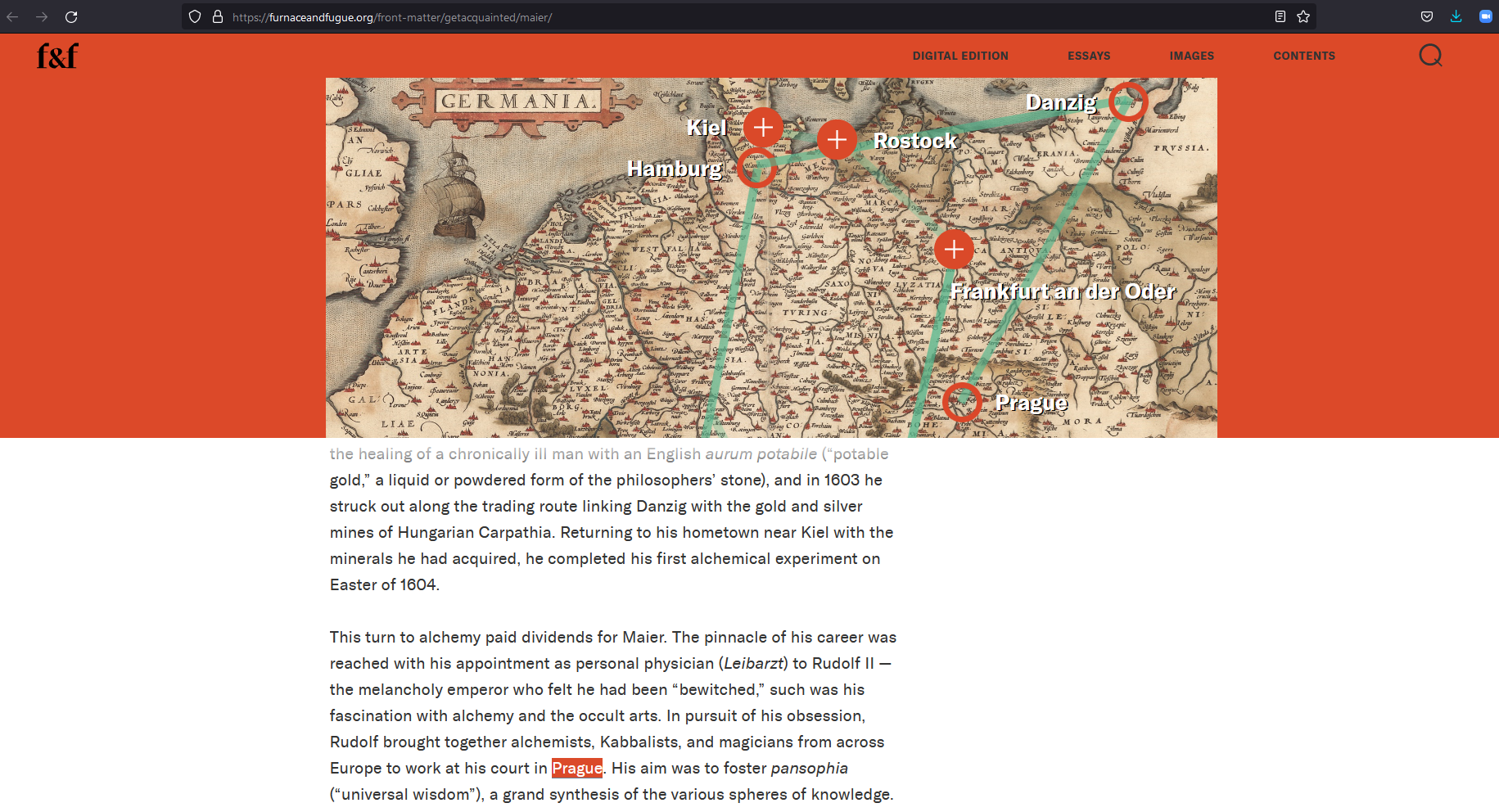
Classifying Furnace and Fugue as a digital scholarly edition is somewhat challenging since it does not provide a critical edition of Atalanta fugiens per se, although it does offer scholarly essays on the subject. Thus, one could say that it meets the criteria of being both a digital edition and a scholarly resource. The map included in Tilton’s introduction, for instance, does a convincing job of visualising Maier’s travels, however, this particular feature does not truly lose its usefulness when given in print form (fig. 23). Then again, Digital Humanities scholars are probably not the primary target audience, as certain notable features, such as the ability to create personal emblem collections and interactive rearrangement, are not highlighted in the documentation as the noteworthy features they are. Furnace and Fugueincludes interactive digital features that cannot be replicated in print, suggesting its classification as a digital scholarly edition.*
Potential future work for Furnace and Fugueincludes integrating the image search with Emblematica Online or similar sources. This would entail tagging the images according to the IconClass guidelines for easier comparison of potential visual inspirations. The text could benefit from a philological approach and a text-critical edition, providing explanations of visual motifs and sources directly on the text in the form of a traditional commentary. Having to retrieve and reassemble the information scattered throughout scholarly essays makes it hard to form one’s own interpretation of the text. Additionally, integrating the sources identified by De Jong or providing an easily searchable overview of De Jong’s findings would be valuable (Jong 2002, 330-33), maybe even linking to the sources of relevant facsimiles available online. Further research could explore the chemical interpretations of Atalanta fugiens, as done in Werthmann.* Many publications suggest that this topic is already dealt with yet there are hardly any publications explaining why this supposedly is so.
While Furnace and Fugue has a beautifully designed layout and a collaboration with a traditional publishing house, it could enhance the user experience by providing more transparent information about its sources, such as the 17th century English translation, and improving the accessibility of footnotes in scholarly essays. While the resource offers diplomatic and normalised transcriptions of the Latin-German original book and its 17th century English translation, textual scholars may desire a critical apparatus or commentary at the word or sentence level. The scholarly essays provide interpretations but do not constitute a philological or text-critical edition as implied by the project title.
Additionally, the long-term archiving situation and data management plan require clarification. The insights gained from the project should be published in a Digital Humanities publication to make them accessible to the wider community and ensure preservation for the future, involving both the editors as well as the technical leads of the project. Such a publication could summarise some of the information which can now be found by listening to a number of podcasts on the project but also explain decisions made in the process of creating this publication in more detail, especially with regards to experimenting with ways to handle the multimediality of the sources, potential reuse scenarios (and a long-term archiving plan) for the data and libraries created for the project. Furthermore, it would be great to have a deeper description of the digital aspects of the project which goes beyond the brief project description (backmatter/about). Overall, Furnace and Fugue is a stunning project that provides a valuable platform for both the general public and scholars to explore Atalanta fugiens.
Conclusion
Furnace and Fugue is the first born-digital monograph by Brown University Digital Publications, consisting of eight interpretative essays, three introductory texts, and a digital edition of the early modern emblem book Atalanta fugiens (1618a), including a MEI-based music player, using which individual voices can be isolated for analysis and demonstration, an invaluable feature for lectures or educational presentations. The edition shines in its elegant visual presentation and interactive capabilities. For instance, the feature to create personalised emblem collections is significant, allowing focused, individualised study. Additionally, the image search functionality lets users dive deeply into the material, even if it could benefit from integration into existing emblem databases and search engines to facilitate even broader comparative studies. Particularly noteworthy is the innovative MEI Viewer/Player, which opens new vistas for understanding Maier’s intricate fusion of music with alchemical thought, allowing even those without a music theory background to engage deeply with the fugues. The feature not only empowers academic scrutiny but also extends the project’s appeal to a broader audience.
A flagship project and ‘haute couture’ digital edition, Furnace and Fugue pushes the boundaries of multimedia publication in the historiography of alchemy. Nummedal and Bilak have seamlessly blended the realms of digital scholarly edition and digital scholarly publication, with the edition being accompanied by essays from various disciplines. In the context of alchemy research, where digital scholarly editions are still relatively few, Furnace and Fugue is an innovative project, taking its place alongside the only two other major digital editions, the 2009 pioneering Chymistry of Isaac Newton project (Newman 2009) and the influential Making and Knowing project (2014-2021, Smith 2020). The comprehensive and interactive digital platform realises the multimedia experience likely envisioned by Maier for Atalanta fugiens, a feature hitherto inaccessible to most users of the book. In sum, Furnace and Fugue enriches scholarship on early modern alchemy and on the chymist Michael Maier. It sets a precedent in its multidisciplinary approach and multimedia digital edition. It represents a significant leap forward in understanding Maier’s multimedia vision and its implications for his alchemical thought.