
Ways of making digital editions of historical recipes and experimental texts: The Making and Knowing Project
DOI: 10.18716/ride.a.21.4
Abstract
The Making and Knowing Project is an educational and research project that has employed citizen science to produce a digital critical edition of the 16th-century manuscript BnF Ms. Fr. 640, along with accompanying educational resources. Situated within a historiographical turn centered around materiality and practical making, the Making and Knowing Project, led by Pamela Smith, explores the tacit knowledge of early modern artisans and practitioners. A major component involves the recreation of historical recipes in educational laboratory settings, documented in the form of essays. The other central component is the digital critical edition of the anonymous French technical tract, BnF Ms. Fr. 640. The first version of the edition and website was completed during the initial funding phase by 2020. Further funding has supported continued development of the edition and related outputs, such as a teaching companion and the digital scholarly editing tool Edition Crafter. Making and Knowing is a flagship project in historical recipe research and in the application of experimental methods in the history of science and knowledge.
Introduction
The Making and Knowing Project (with the subtitle “Intersections of Craft Making and Scientific Knowing”) is situated at the intersection of the experimental history of science,* recipe research and the Digital Humanities, leveraging the help of citizen scientists to create a digital scholarly edition.* The recreation of historical recipes within educational laboratory contexts, documented in detailed essays, complements a digital critical edition of a 16th-century technical treatise, BnF Ms. Fr. 640. While the initial version of this digital scholarly edition was completed during the first funding run in 2020, the project later received additional funding to hone in on Digital Humanities aspects, which go beyond the first version of the digital edition. The Making and Knowing Project has received the Eugene S. Ferguson Prize (2019) and the Renaissance Society of America’s (RSA) Digital Innovation Award (2022).
In seeking to understand historical practices of knowledge-making, historians of science have moved away from a narrowly defined concept of science as distinct from a broader history of knowledge. This shift reflects a growing recognition that knowledge production extends beyond the traditionally elite domains typically associated with the sciences. By focusing solely on a conventional history of science, scholarly attention has often been limited to specific practices and actors—frequently members of social or intellectual elites—while marginalising or overlooking the contributions of more everyday forms of knowledge.
The Making and Knowing Project is situated within a historiographical tradition that centres the study of knowledge rather than science alone. It aligns with the material and practical turns that have reshaped epistemological and historical inquiry in recent decades (Rheinberger 2001). Closely related to these developments is the adoption of experimental methods, which have transformed the study of historical craft practices. Once viewed as peripheral or esoteric, such practices are now understood as central to the emergence of modern science and knowledge-making. In this framework, the historical practices of artisans, craftspeople, and alchemists are reframed not merely as precursors to scientific disciplines such as chemistry, but as integral components of their historical development (Smith 2006, 292). This perspective emphasises the complex interrelationship between textual sources and embodied, material practices.* With the emergence of the experimental history of science, the so-called 'RRR methods'—reconstruction, replication, and re-enactment—have become a pivotal tool for investigating the tacit and practical dimensions of historical scientific practices (Hendriksen 2020, 314).* These methods help address the documentary gaps in historical recipes (Fors et al. 2016).
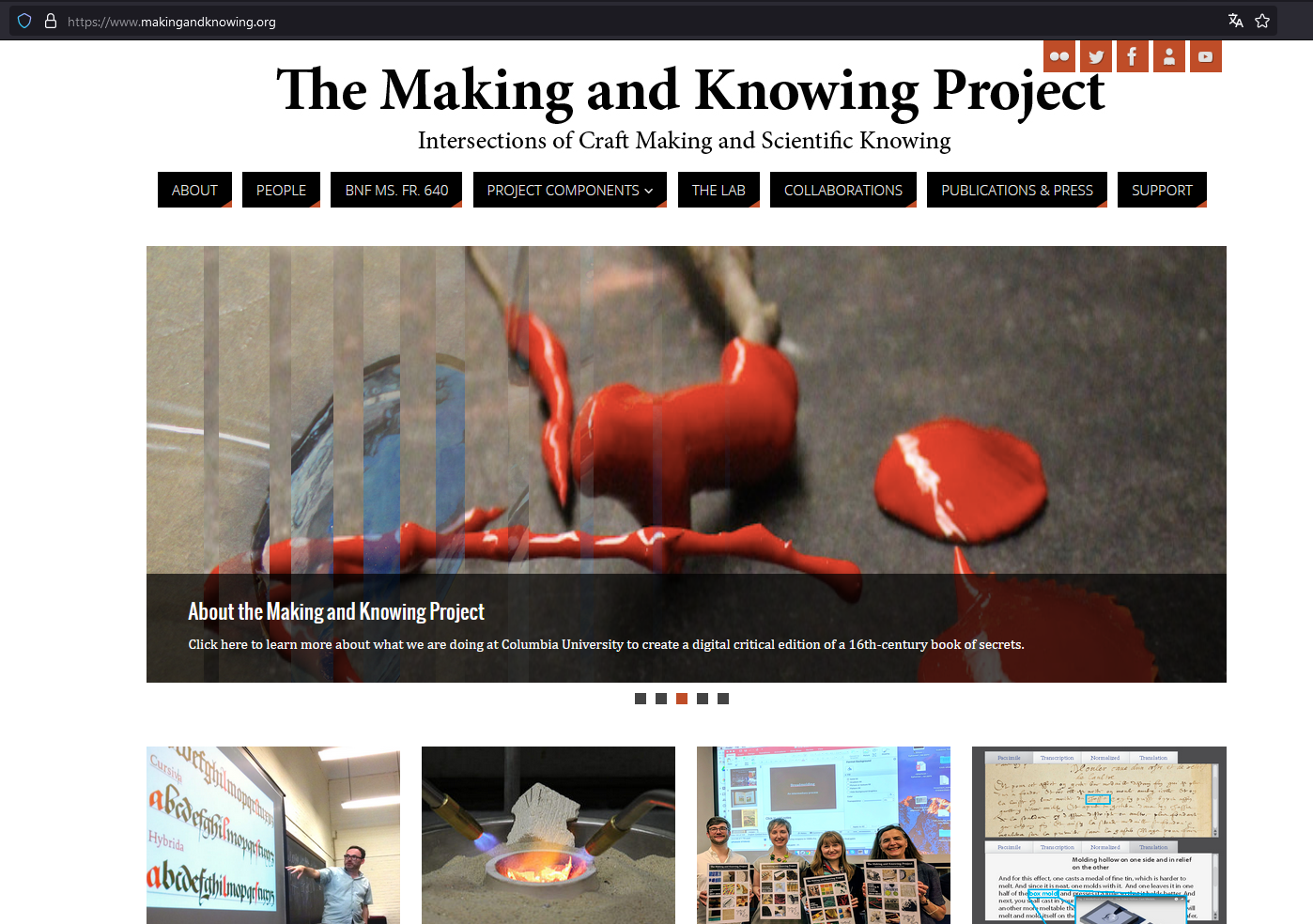
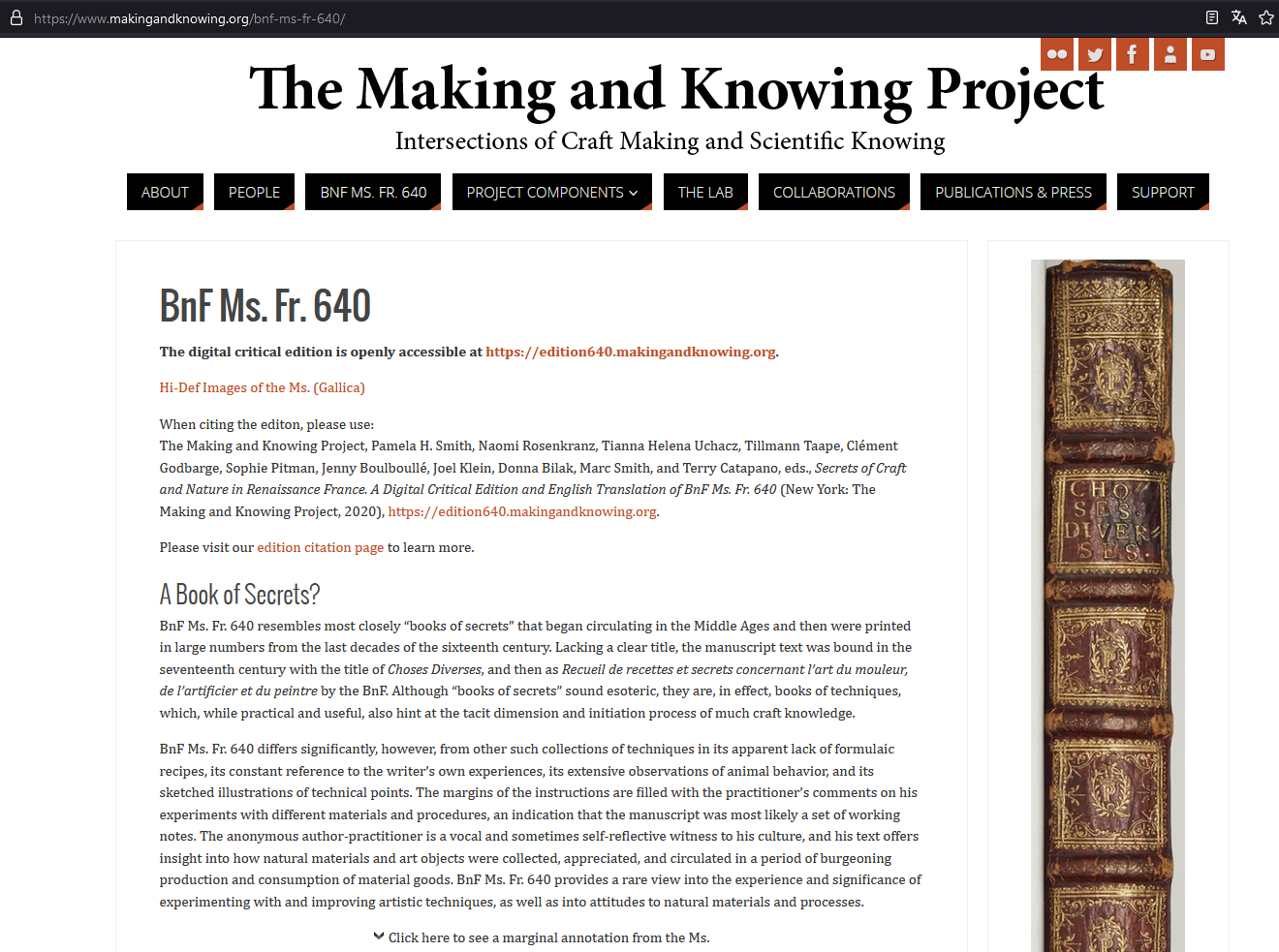
Under the leadership of Pamela Smith, the Making and Knowing Project has employed citizen science to craft a digital critical edition of BnF Ms. Fr. 640 (see the main website in Fig. 1). Li (2020, 586) describes the edition as “an exceptionally close reading of the sixteenth-century manuscript Ms. Fr. 640, an anonymous early modern source composed of handwritten entries that pertain to the history of science, art history, and material culture.” Over 500 collaborators helped create a full transcription and translation for 340 pages of manuscript. Over one hundred essays, many created by ‘grad scholars’ participating in laboratory seminars, represent an impressive output of the citizen science side of the project. Grounded in the historiographical turn centered on materiality and craftsmanship as sources for the history of knowledge beyond scholarly discourse, the project investigates the tacit knowledge (Polanyi 2009, Sibum 2020) of early modern artisans and practitioners. In its description (“About” section, see Fig. 2), the project frames itself as both a research and pedagogical initiative exploring intersections between crafts making and scientific knowing. It explores the earliest phases of a period p referred to as the “Scientific Revolution” where artisanal making and scientific knowledge production using experiments still overlapped.* The Making and Knowing Project presents the results of its research at the intersection of laboratory and archival work using the digital medium. The digital edition was first launched in 2020 and updated to a more user-friendly version in 2021.*
The Project
The Making and Knowing Project is situated at the Columbia University Center for Science and Society and led by Pamela Smith (Seth Low Professor of History, Director of the Center for Science and Society), Naomi Rosenkranz (Assistant Director) and Caroline Surman (Project and Communications Coordinator).* Apart from the editors, a considerable number of individuals have contributed to the project, ranging from Digital Humanities professionals, palaeographers, postdoctoral and visiting scholars, makers, teaching assistants to student research associates and laboratory assistants.* The project (and its web components) are twofold: A project website containing all activities revolving around Making and Knowing as well as the Digital Critical Edition of BNF Ms. Fr. 640 whose first version was released in February 2020. The Making and Knowing Project also maintains a number of social media outlets to keep the public and research community updated on the current state of the project. Apart from the Flickr photo repository, the project has X, Facebook, and YouTube accounts.* The “Publications and Press” section provides an extensive overview of outputs generated in the Making and Knowing Project, covering a wide range of categories from a GitHub sandbox, public lectures, scholarly articles and books, press mentions to artistic responses.*
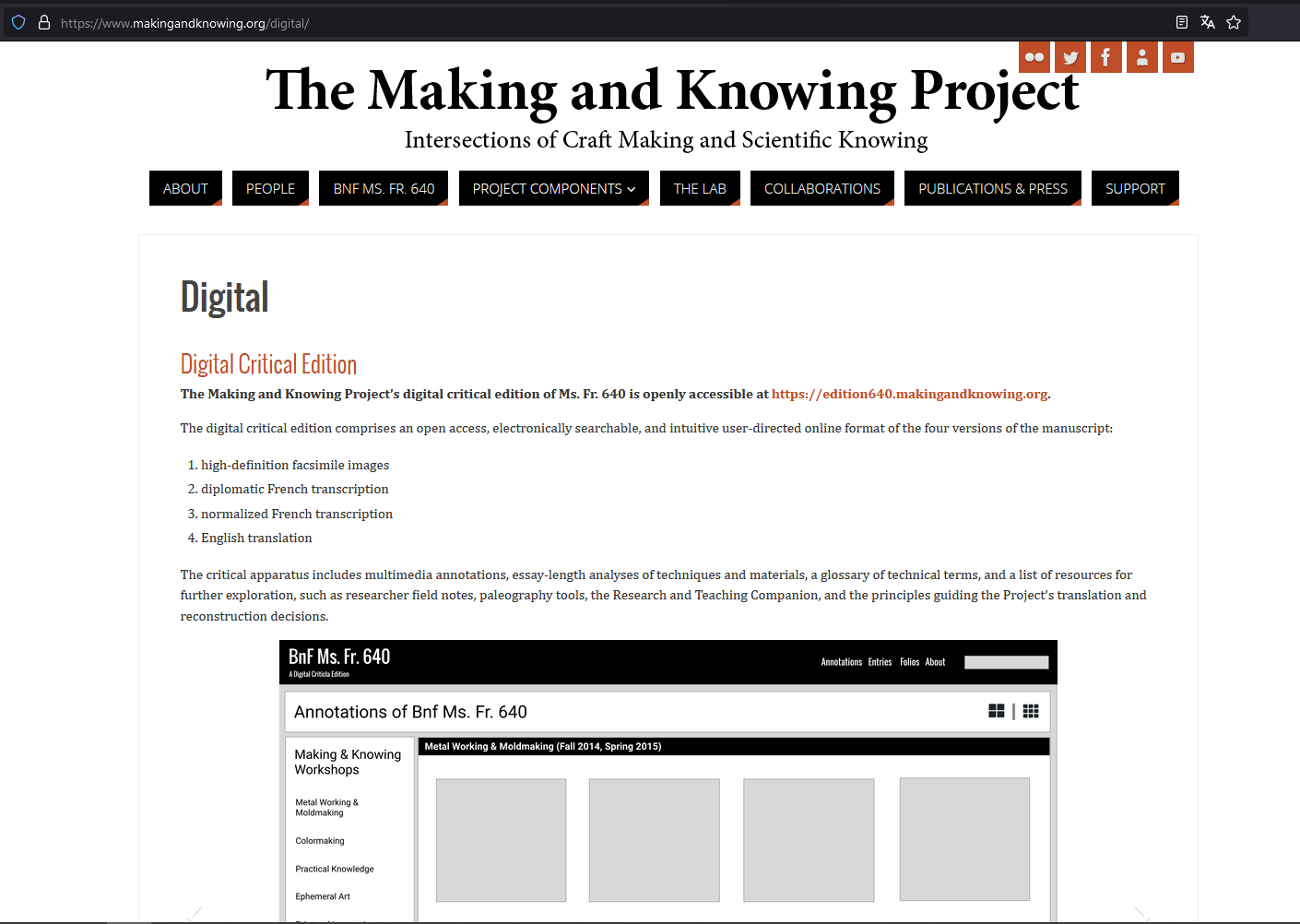
Under “Support”, the project declares itself as “a largely self-funded initiative” relying on federal or internal grants as well as donations, and its funding sources are listed.* The “Collaborations” tab lists an impressive number of collaborating institutions.* In “The Lab”, users of the website are redirected to a YouTube playlist containing the video outputs of the project.* The “Project Components” tab provides further information on text workshops, lab seminars, and working groups previously held in the context of the project as well as digital project components. The somewhat cryptically named dropdown option “Digital” (Fig. 3) leads users of the website to information on the digital critical edition.* This offers diplomatic and normalized French transcriptions as well as an English translation of BNF Ms. Fr. 640 alongside high-resolution facsimile images. A YouTube video of the Beta version is embedded as a demo. Below are two lists of “annotations” although the purpose of those lists remains unclear to the author of this review. After it follow links to earlier prototypes of the digital edition as well as the project sandbox, a GitHub.io site allowing users access to experiment with the data underlying Making and Knowing. Long-term sustainability of the digital edition is provided by the Columbia University Libraries where it is provided as Open Access. The page further documents three 2017/2018 Digital Humanities courses in collaboration with the project. Through the use of ‘expert crowd sourcing’, i.e., citizen science in the form of university class projects, the project has created a critical edition and English translation of its source.* For example, the first transcription and markup were created during a series of three-week workshops with graduate students, beginning in 2014, teaching them practical skills in middle French palaeography while yielding base data for the digital edition.* The replications of historical recipes were conducted as part of laboratory seminars involving modern expert practitioners, such as conservators, artists, and craftspeople.
The Digital Critical Edition
Between 2014 and 2020, the project’s main focus was creating a digital critical edition of an anonymous French technical manuscript dating from the 16th century, BnF Ms. Fr. 640. The manuscript, begun sometime after 1579 by an anonymous author, consists of 170 folios, or 340 pages, of closely written text with hand-drawn figures. It contains recipes, instructions, notes, and first-hand accounts of experiments with diverse materials, techniques, and observations from pigment application to imitation gem production, compiled over an unknown period, probably until around 1588. The resulting manuscript is now known as Bibliothèque nationale de France, Ms. Fr. 640. It is a unique record focusing on processes and the practice of making, and thus an invaluable source for the history of craft and material culture in the late sixteenth and early seventeenth centuries.
This manuscript was transcribed and is given in its original French as well as an English translation. To satisfy the particular needs of editing the text of artisanal recipes, the critical apparatus offers not only annotations but also essay-length analyses and a glossary of technical terms. Apart from this multimedia apparatus to the text itself, the project held laboratory seminars, workshops, and working groups bringing together a wide array of interdisciplinary expertise whose results can also be accessed on the project website. The laboratory seminars would, for example, bring together university students (“grad student scholars”) and artisanal experts (from museums or craft-making contexts) to reconstruct the recipes contained in BnF Ms. Fr. 640, thereby understanding it better. The tacit and gestural knowledge as well as practical insights from these historical-critical experiments thus function as a new dimension of critical apparatus to further inform the reader, just like linguistic notes or notes on the transmission of a historical source.*
The “BNF MS. FR. 640” tab provides a central point of entry to the digital edition, situating the source briefly as part of the “books of secrets” genre, recipe books or how-to manuals which had become especially popular in the last decades of the 16th century.* It contains a citation suggestion and links to a sub-site dedicated specifically to citing the edition. Since the identity of the person responsible for writing or compiling BnF Ms. Fr. 640 is unknown, they are referred to as “the author-practitioner” throughout the Making and Knowing Project. This technical writing transmits the “maker’s knowledge”—the tacit or gestural knowledge of craftspeople who, previously illiterate, began recording their recipes during the print boom between 1490 and 1800. However, the editors describe BnF Ms. Fr. 640 as singular within this genre, as it is filled with self-reflexive commentary and process notes by the author-practitioner, offering a unique window to their ways of making and knowing.
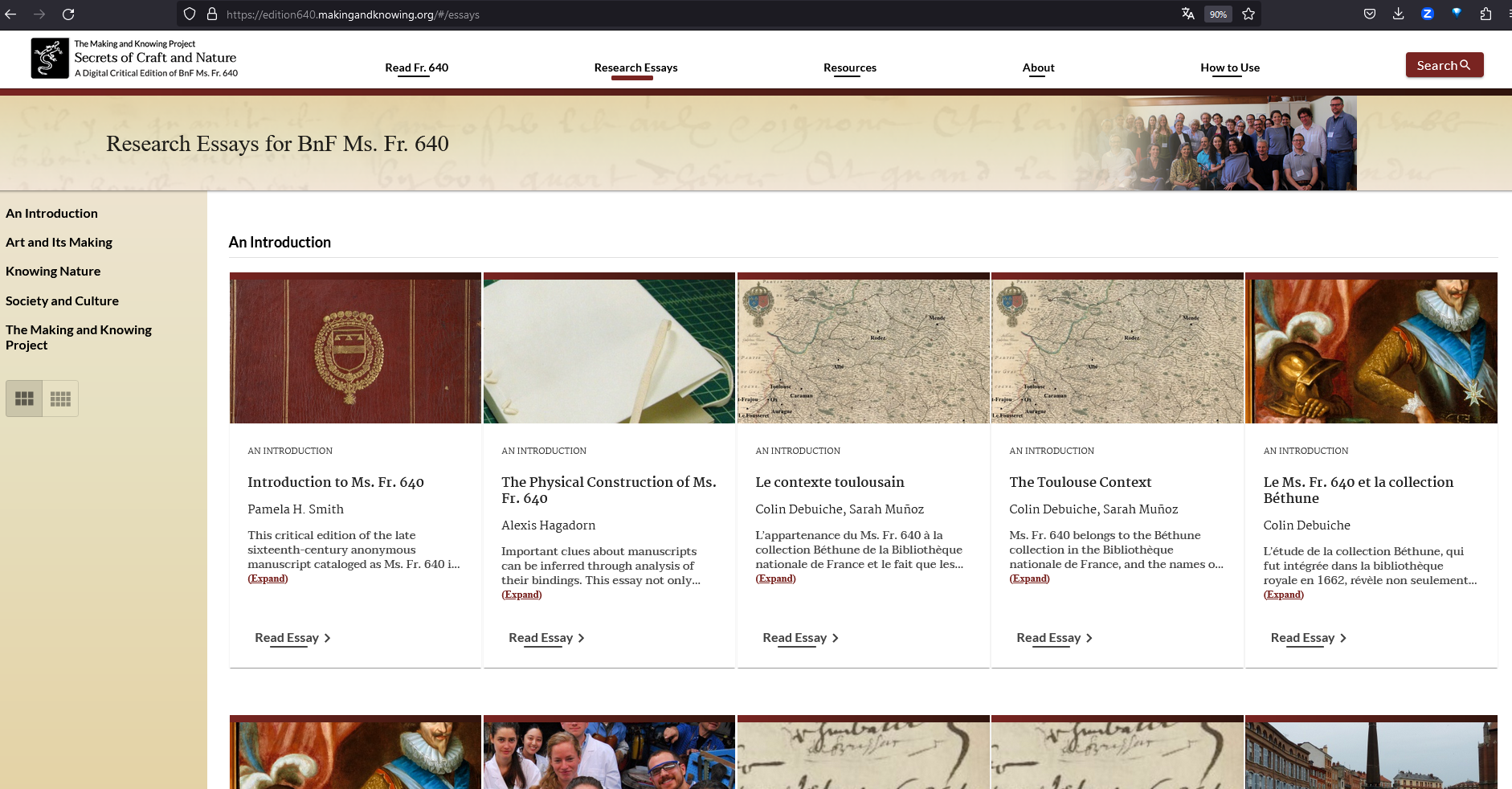
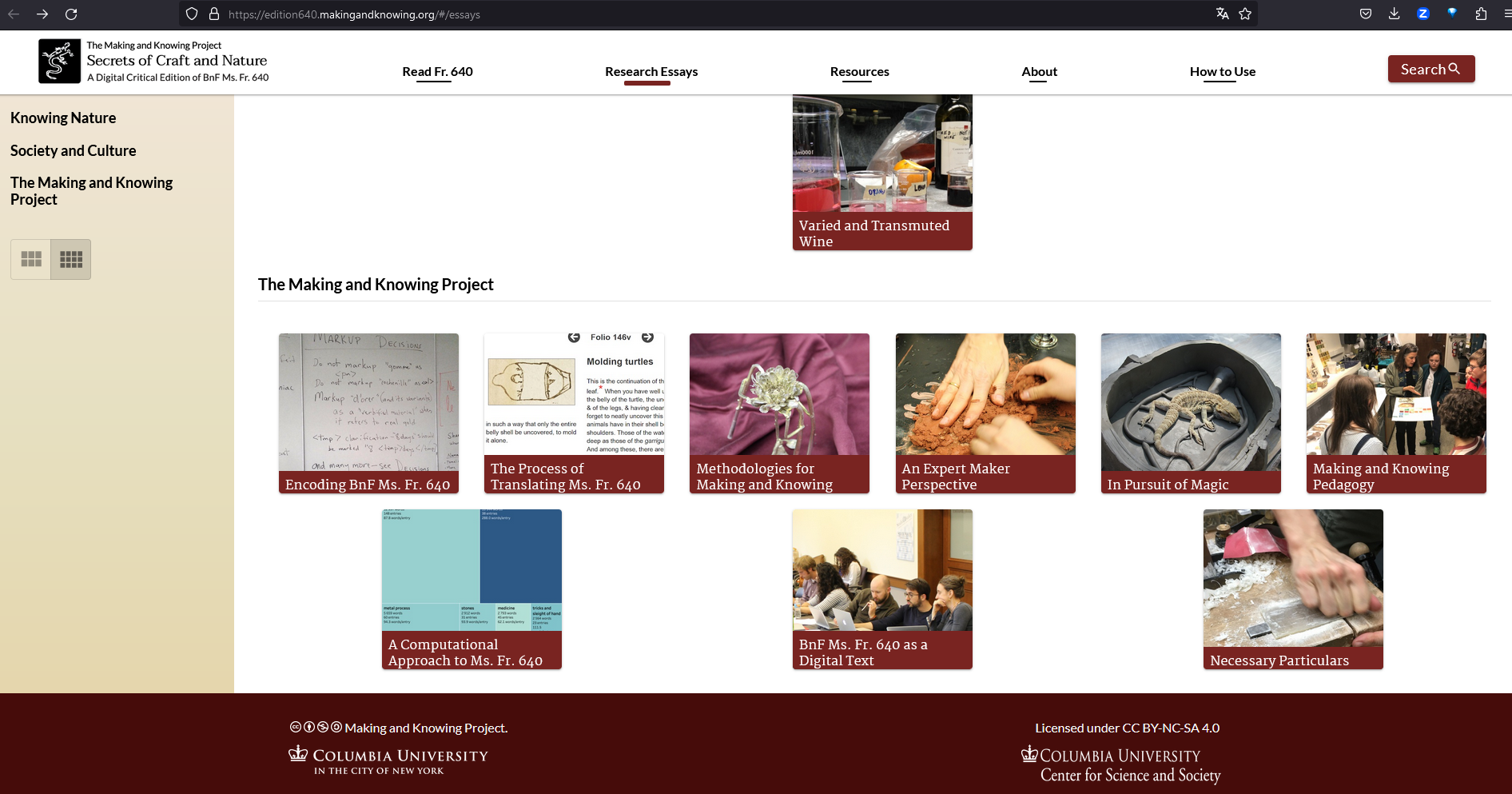
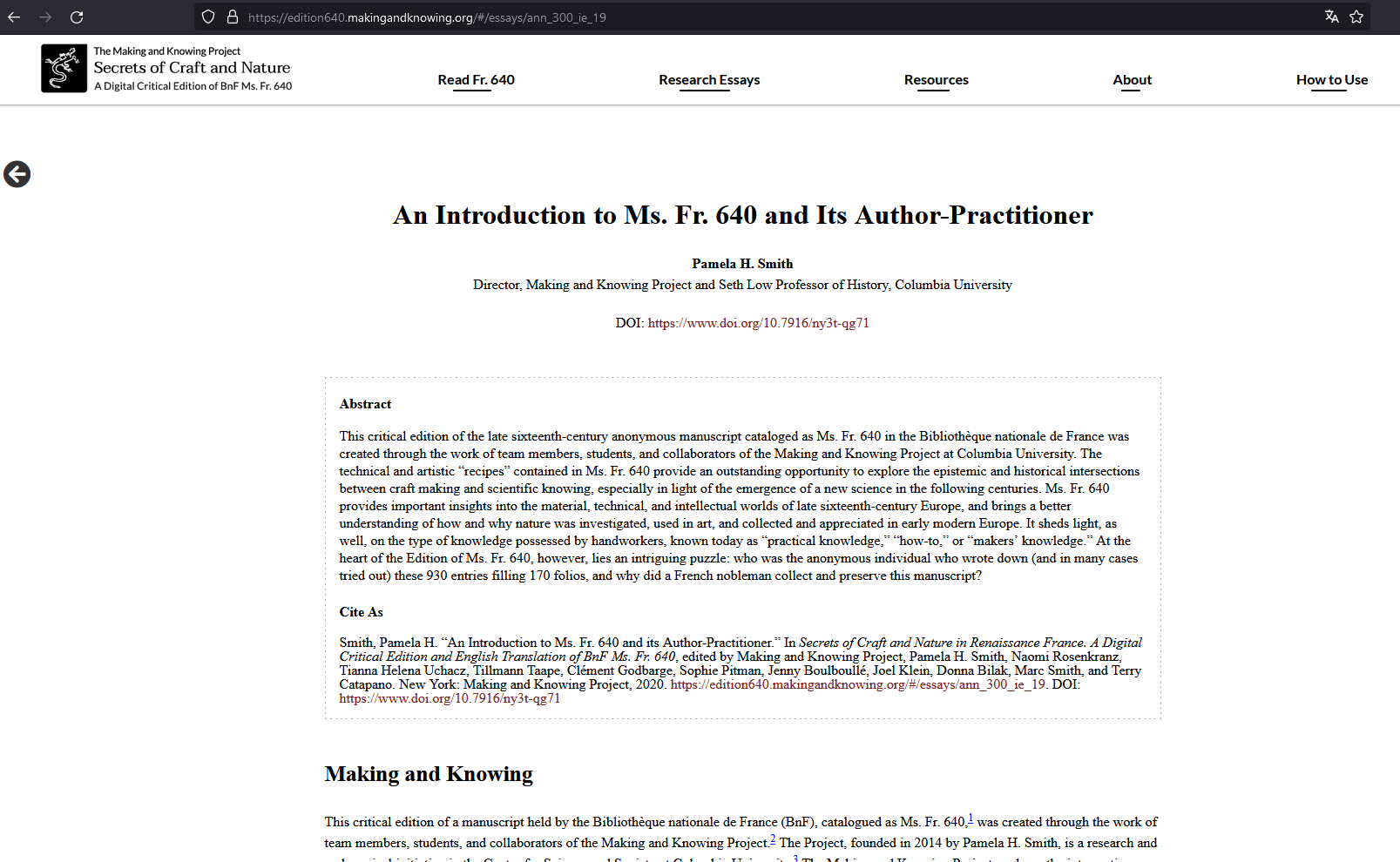
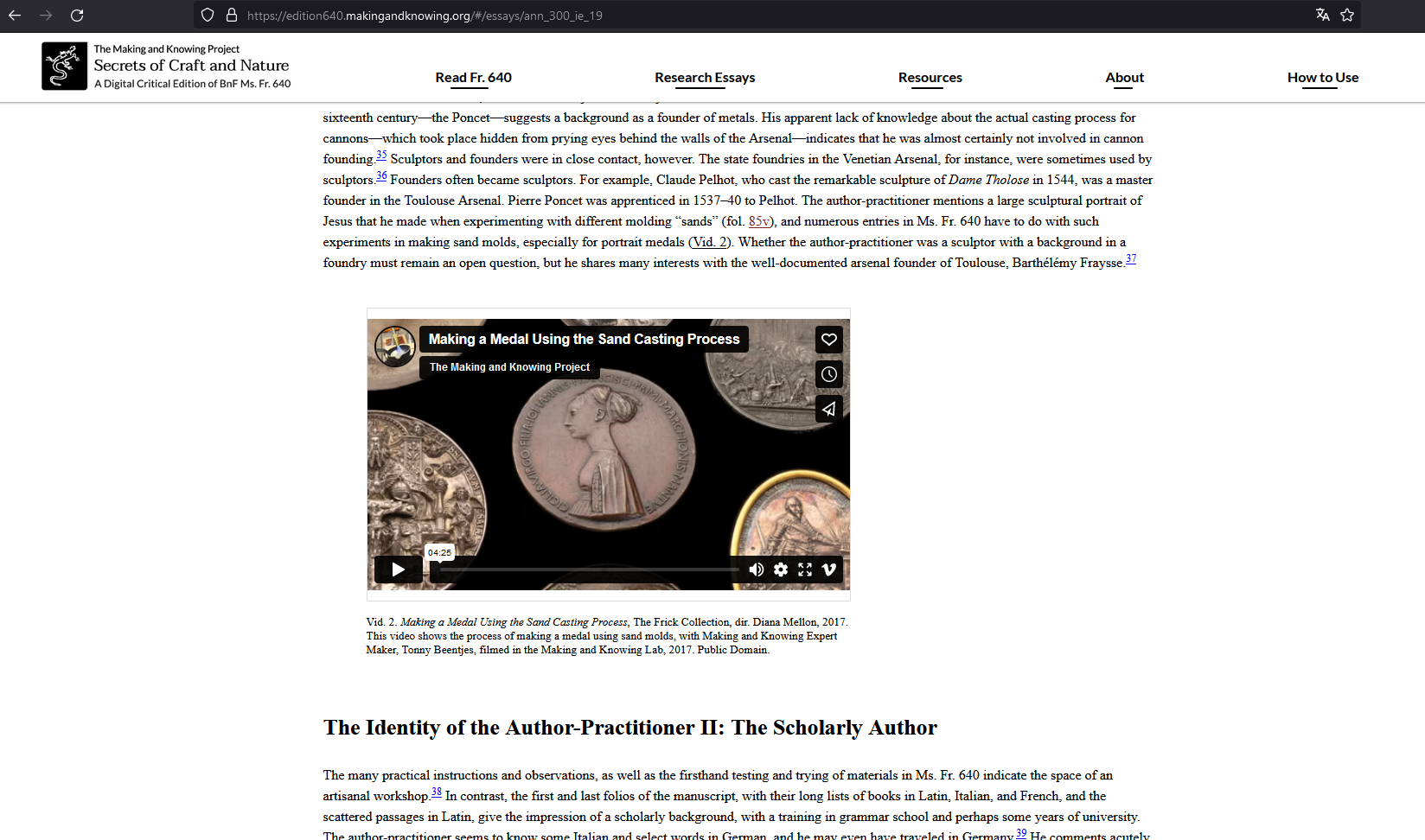
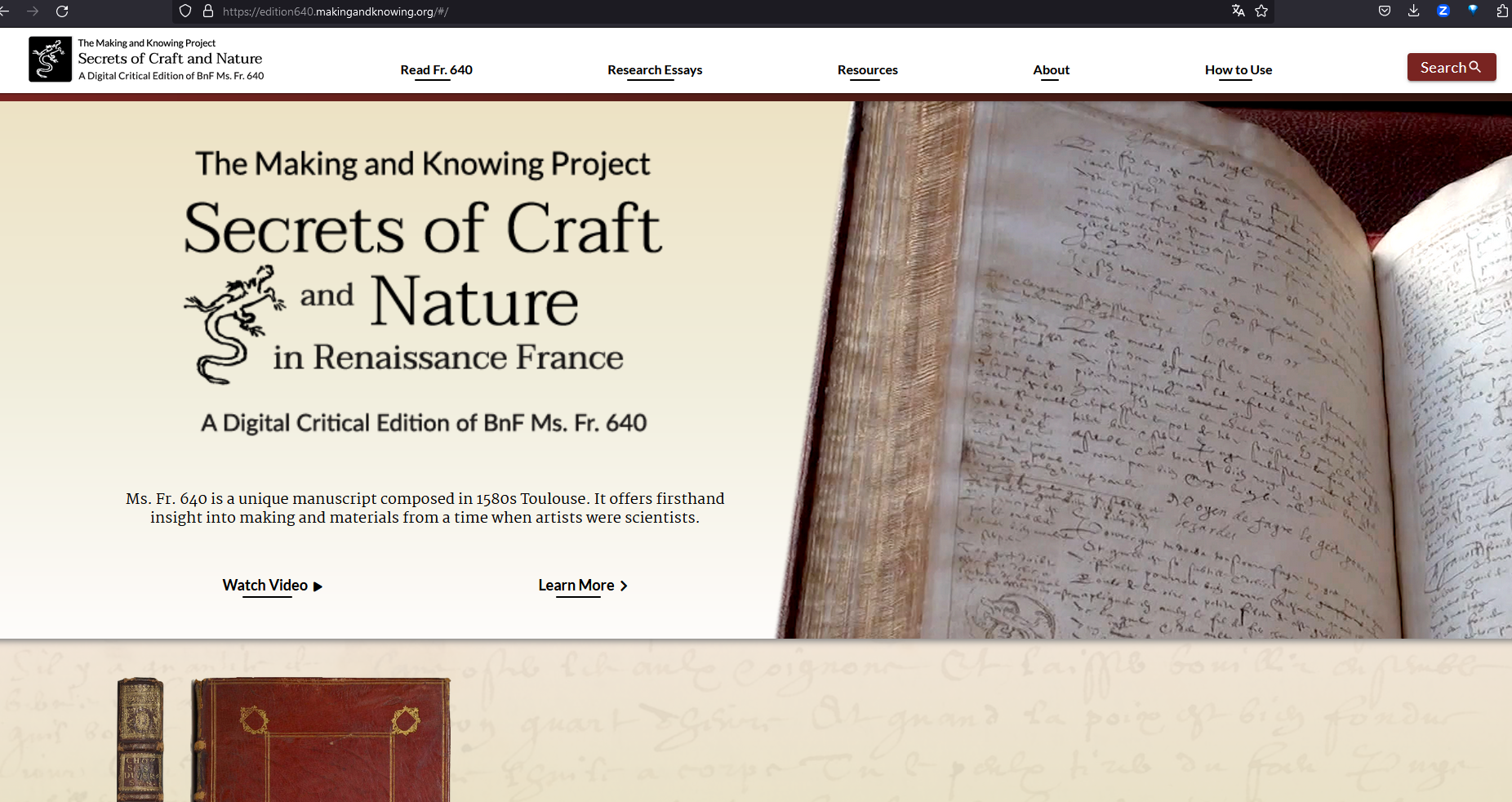
Once the user of the website clicks “Explore” or any other link to the edition itself, one is directed to a dedicated landing page.* From there, one can choose to watch a video, “Read the edition”, “Learn more” (leading to the “About” page) or access a list of resources and featured essays (Fig. 4, 5, 6, 7).* The essays all have their own DOI and citation suggestions.* Their topics range from essays explaining the edition itself (Fig. 5) (“An Introduction to Ms. Fr. 640 and Its Author-Practitioner”, “Ma<r>king and Knowing: Encoding BnF Ms. Fr. 640”, “The Manuscript Seen from Afar: A Computational Approach to Ms. Fr. 640”), information regarding the manuscript as a text-bearing object (“Making Ms. Fr. 640”, “The Language of Experience in Ms. Fr. 640”) to contextual information (“Artillery in 1590s France”, “Pigments in Sixteenth-Century Europe”) and experimental recreations of recipes in BnF Ms. Fr. 640 (“Counterfeit Coral”, “Uses of Sulfur for Casting”) (for examples of the essays, see also Fig. 6 and Fig. 7). Given the French origin of the manuscript, some of the essays are provided both in French and English versions.
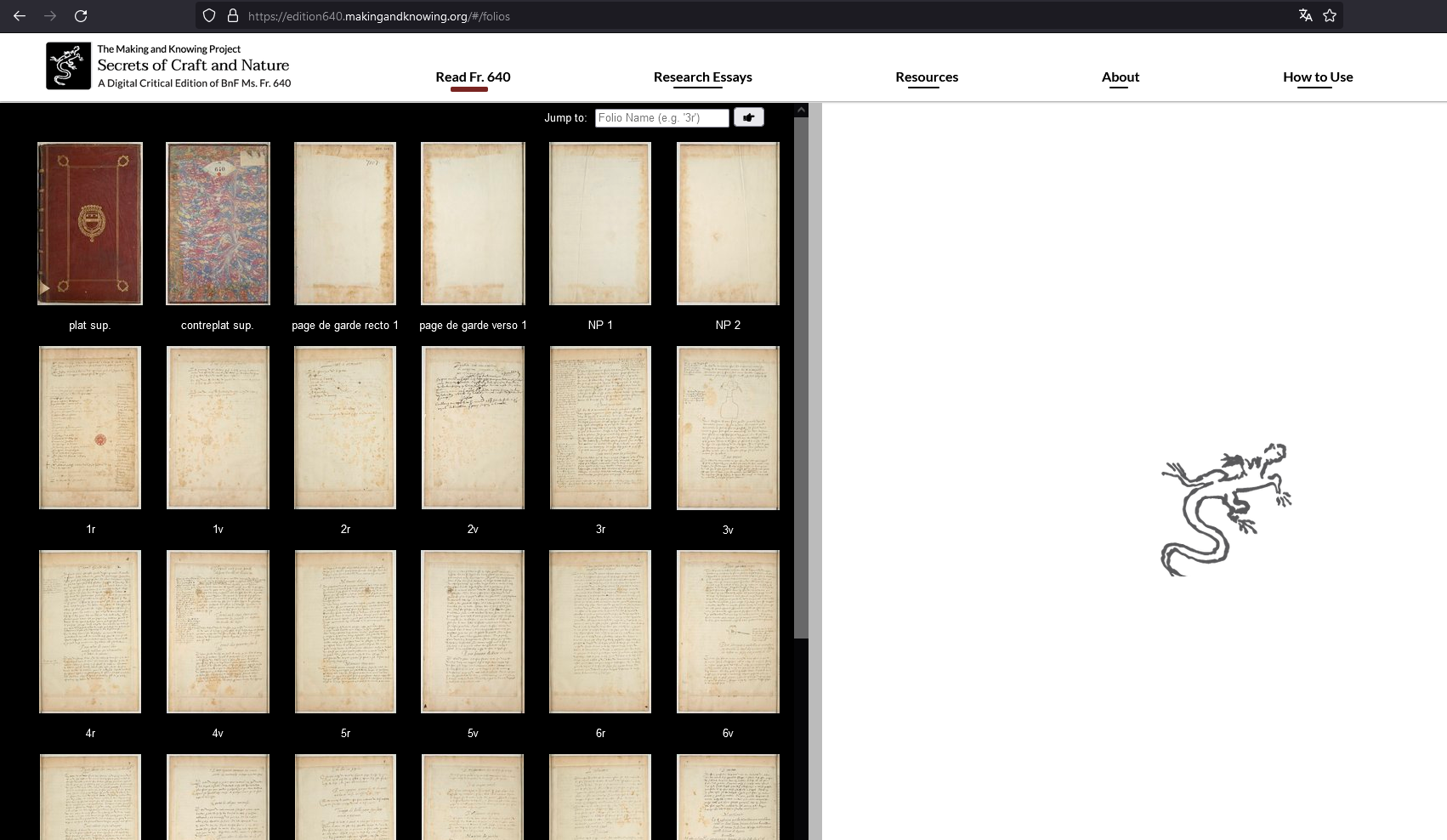
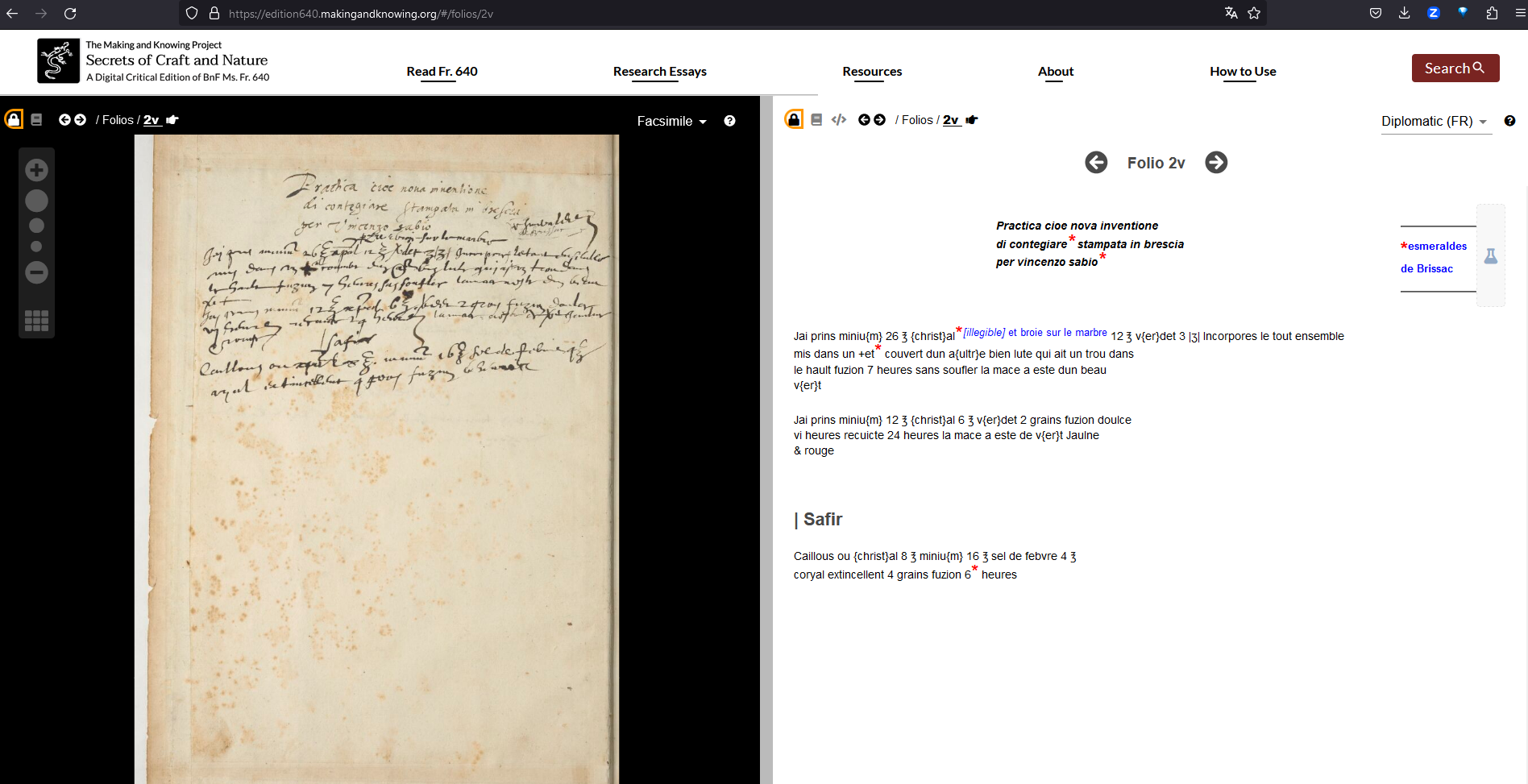
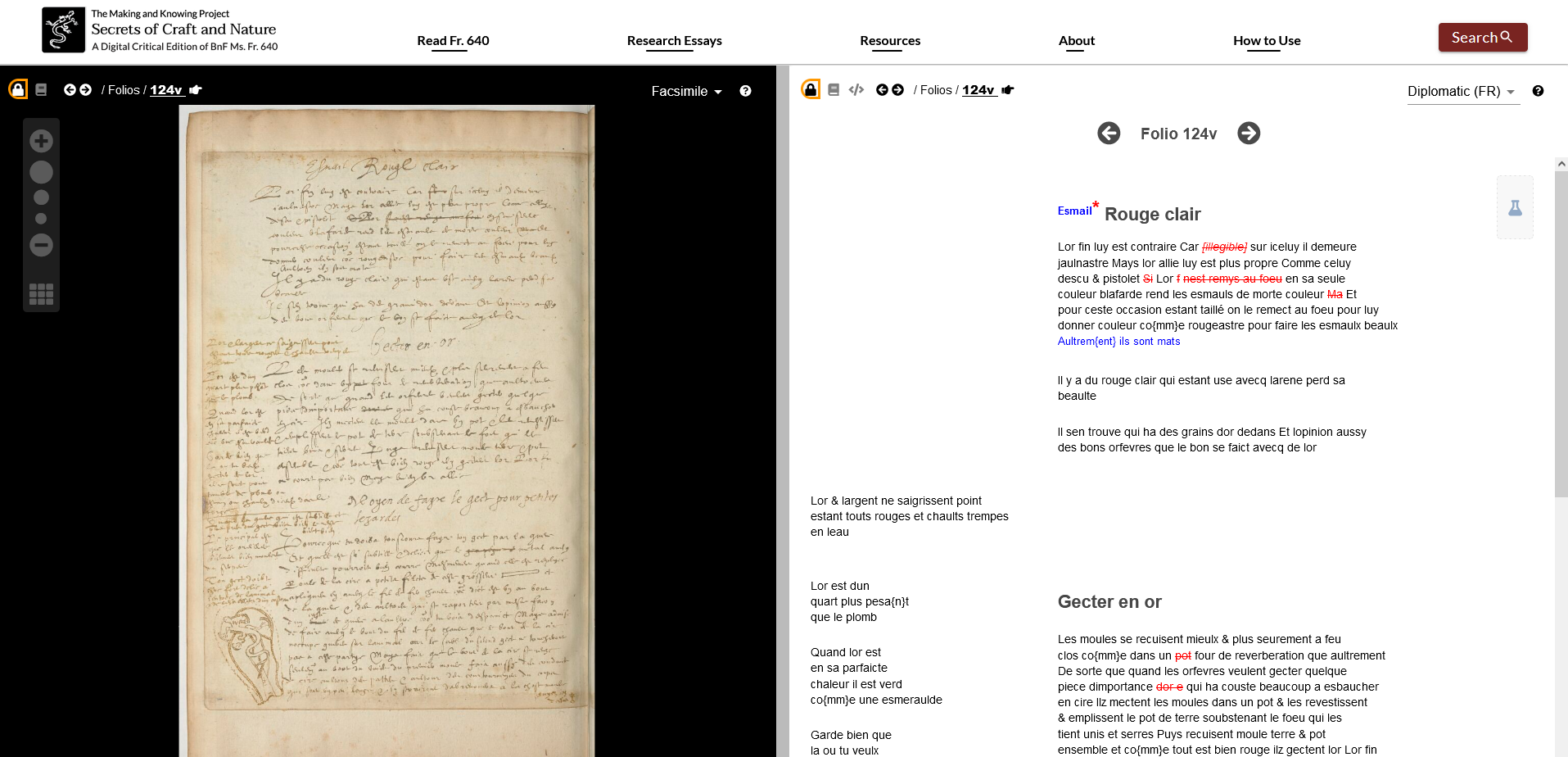
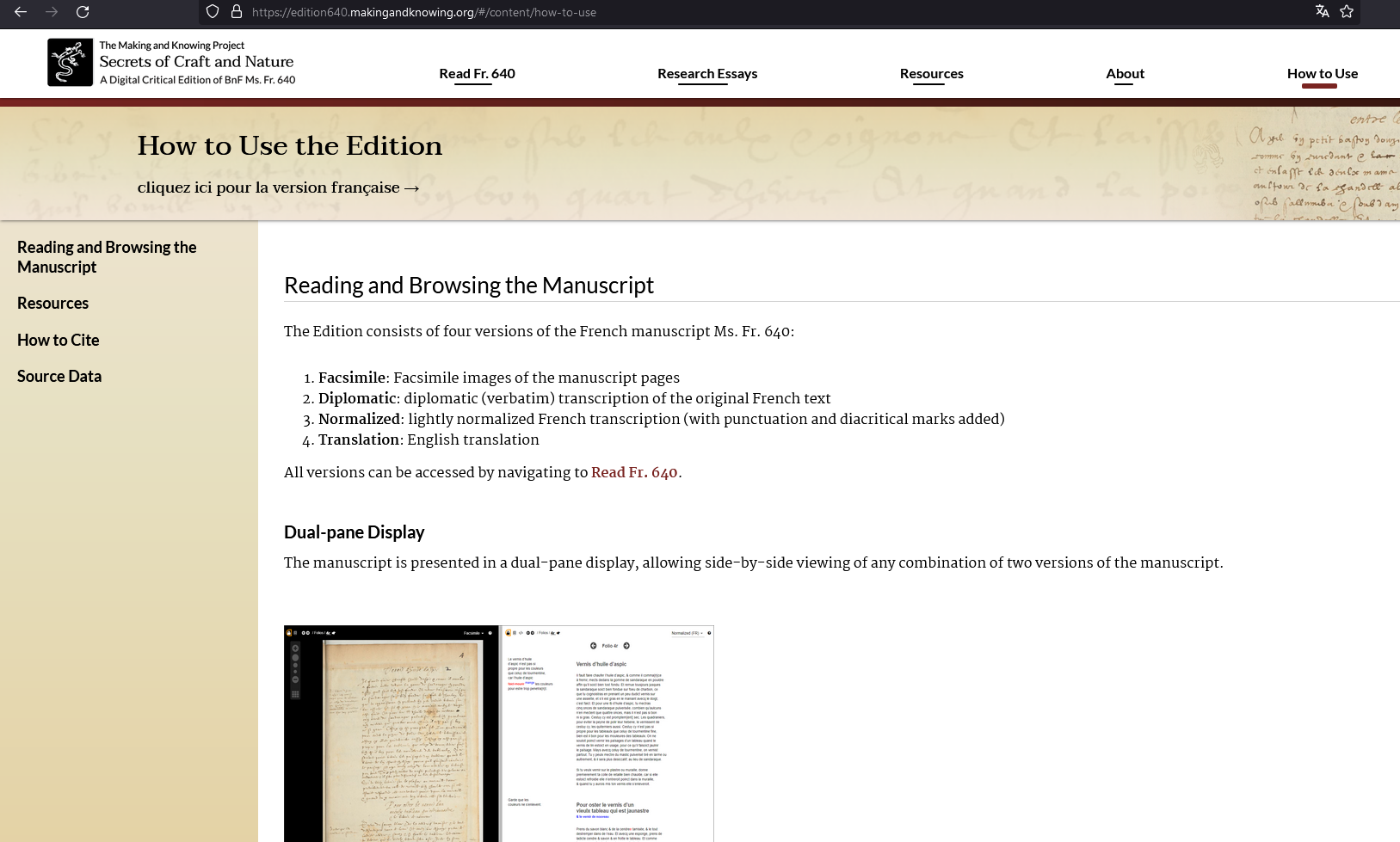
The digital scholarly edition (see Fig. 8, 9, 10, 11, and 12 for screenshots of the user interface) provides detailed information on the manuscript, its author-practitioner, and the making of both the manuscript and the edition itself. It outlines principles of transcription, translation, and encoding, presented through website documentation and accompanying scholarly essays. The digitised facsimile pages derive from Gallica, BnF’s digital library. The edition was developed through workshops, courses, and conferences held within the Making and Knowing Project. Its markup, in a custom XML format inspired by the Text Encoding Initiative (TEI) standard, is available via the project’s GitHub repository, where each folio appears as three XML files: a diplomatic transcription (verbatim in the original French), a lightly normalised version (with added punctuation and diacritics), and an English translation.
The “Resources” section provides access to further material such as a glossary and an extensive bibliography for the edition.* The principles of transcription and how exactly features from the TEI encoding are rendered in the web view are explained in a lot of detail. A “How to Use” section informs visitors of the site how to navigate, for example, the dual pane view of the digital edition or how to search the edition thematically using the tags in the “List of Entries”.* The “Reconstruction Insights” page provides another point of entry for accessing the research essays.*
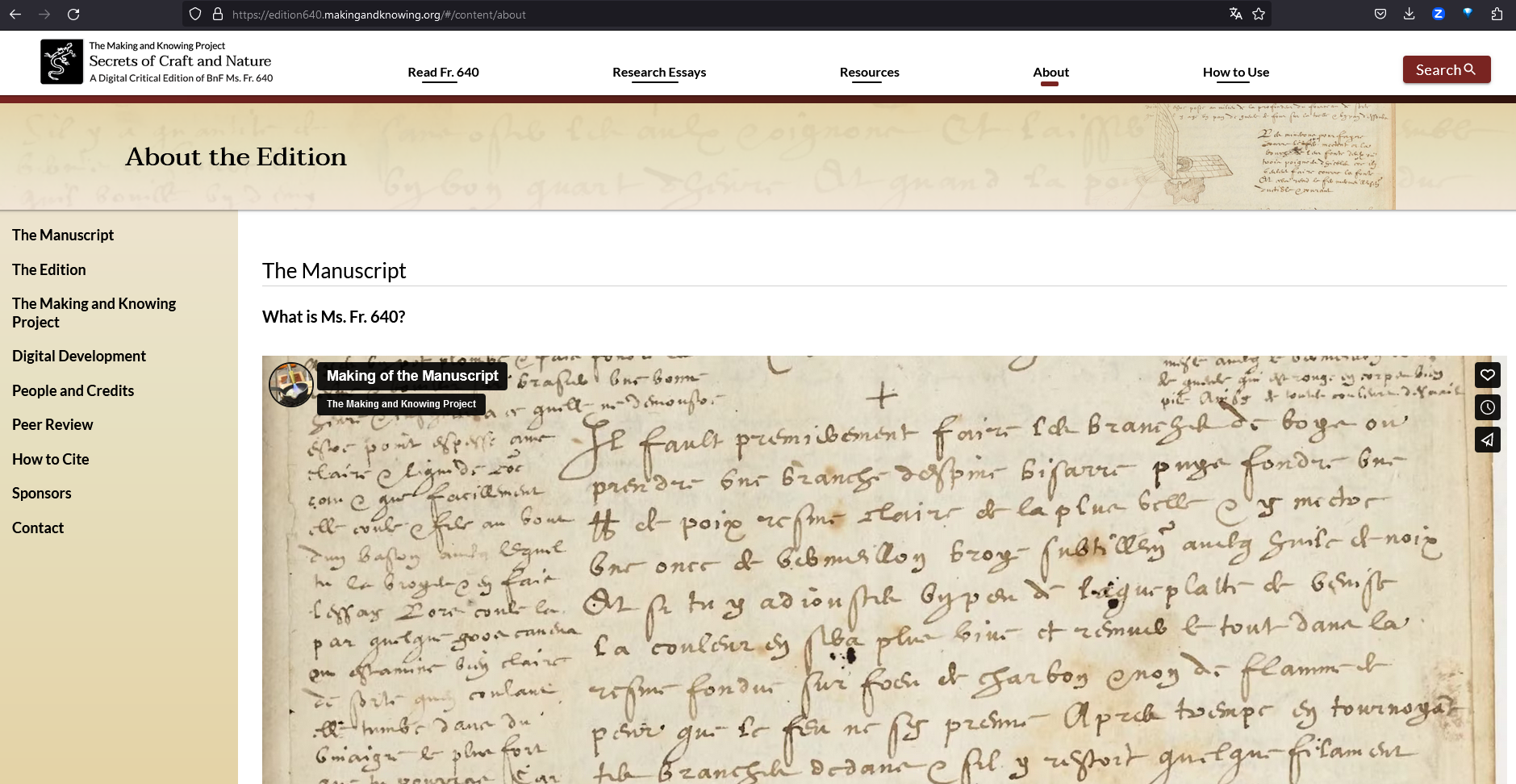
Manuscript data can be accessed via a GitHub repository.* The edition itself provides a parallel view of text (transcriptions or translation) and facsimile images.* The “About the Edition” page contains explanations regarding questions such as ‘What is Ms. Fr. 640?’, ‘What is the digital critical edition?’ or how the digital development was envisioned and implemented.* This page contains links to a number of further pages discussing the edition, transcription, translation, encoding guidelines, and so forth. Creating the digital edition has been the primary goal of the project since its foundation in 2014. It was developed through a series of workshops, conferences, and university courses. Contents were created in a specific form of citizen science that the project lead has termed “grad-sourcing” or “expert crowd sourcing”, meaning that the citizens contributing to the project were picked from the pool of Pamela Smith’s graduate students. Each essay published as part of the edition underwent multiple rounds of internal and sometimes external review to ensure high quality.
The transcription and encoding were primarily undertaken during palaeography and text workshops (2014–2018), which trained graduate students in Middle French scripts and textual encoding. Senior project members and the digital lead later revised and finalised the XML files. The resulting texts conform to a custom schema developed iteratively during transcription and translation. This schema, influenced by the Text Encoding Initiative (TEI), derives much of its tag set from TEI conventions and is maintained in the project repositories, where the encoding principles and full tag descriptions are documented in detail. The edition’s tag set includes common structural and editorial elements such as <ab> (anonymous block), <div> (division), <head> (heading), <hand> (handwriting), <add> (addition), <corr> (correction), <del> (deletion), <emph> (emphasis), <exp> (expansion), <figure> (figure), <gap> (gap), and <ill> (illegible). Semantic categories extend beyond standard TEI usage, incorporating tags such as <al> (animal), <bp> (body parts), <cn> (currency), <df> (definition), <m> (material), <md> (medical), and <ms> (measurement). These additions enable precise encoding of elements relevant to experimental reconstruction. The manuscript’s multilingual elements are also tagged. Although the schema is only inspired by TEI rather than fully compliant with it, this approach allows for highly specific encoding suited to the project’s aims. A stricter adherence to TEI might have facilitated broader interoperability, yet the documentation is so thorough that reuse remains entirely feasible.
The website documentation is exceptionally comprehensive, including written explanations, videos, and photographic material from the workshops, offering valuable insight into how the edition was produced and how collaborative, crowdsourced scholarly projects can be organised. Beyond the brief overview on the “About” page, the sections on “Principles of Transcription”, “Translation, and Encoding” provide detailed explanations, while the “Credits” page lists all participants and workshops, allowing the tracing of individual contributions.
The digital aspects of the project were developed in a collaboration of Making and Knowing Project members with Performant Software Solutions and Columbia University Libraries.* The project commits to making their data accessible openly and storing them sustainably by choosing sustainable, open formats for data creation and using Open Access and Open Source whenever possible. Furthermore, the adherence to minimal computing principles privileges durability over presentational aspects. Data storage is handled on third-party virtual servers (such as GitHub, AWS CloudFront, S3, and DigitalOcean). Facsimile images are provided by BnF’s digital library Gallica and integrated into the edition using their IIIF manifests. Each folio is represented as an individual XML file containing diplomatic French, normalized French as well as an English translation. The encoding uses a project-specific schema inspired by the Text Encoding Initiative (TEI) Guidelines which can be found in the project repository. The XML base data is converted into HTML and JSON for creating the static site contents using a command line tool called Lizard, named after a sketch on the manuscript’s fol. 124v which became the project’s logo.
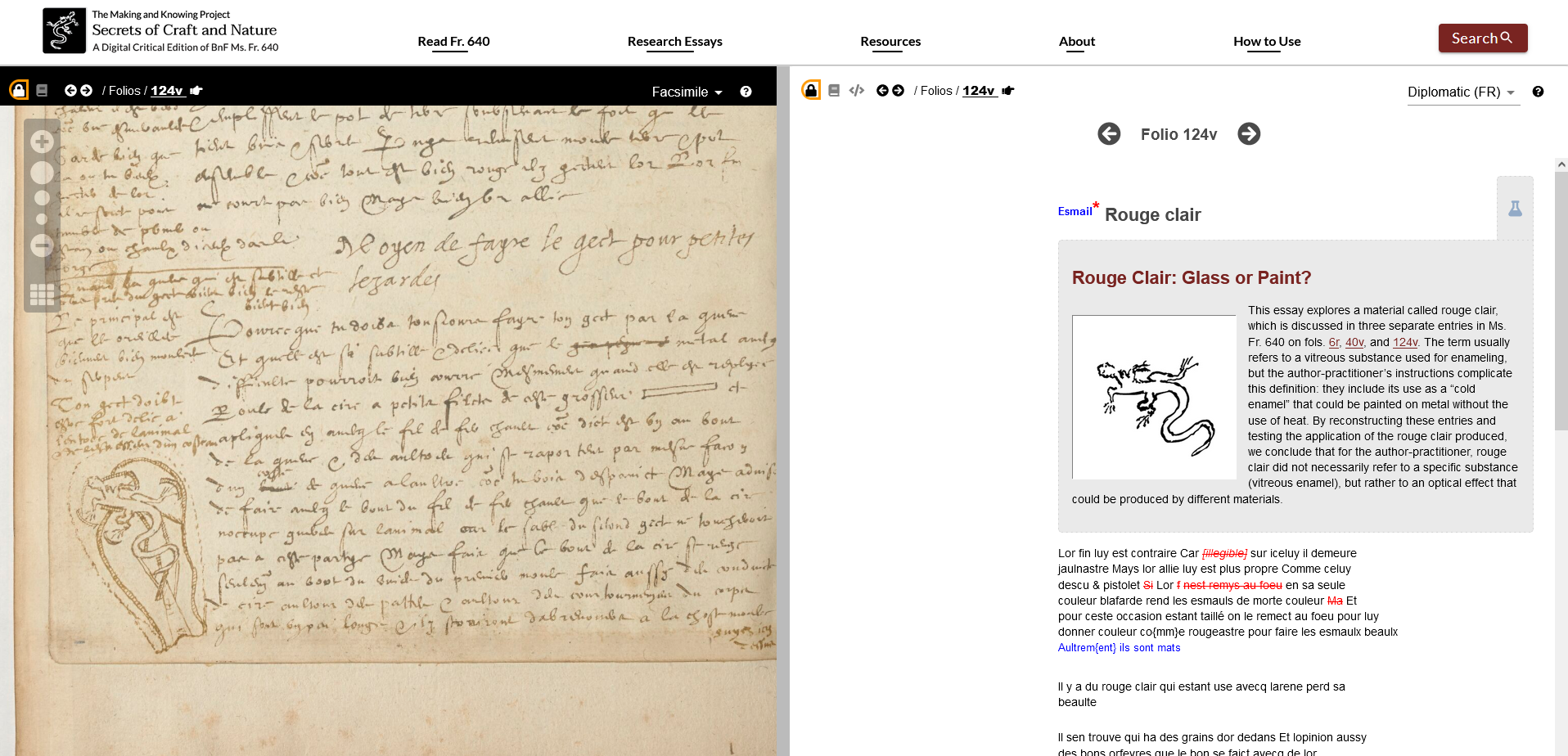
To further highlight the innovative potential of the project, one might have opted to connect the edition and the related research essays beyond merely linking the essays in relevant passages. One could think of the results of replicative experiments as a form of apparatus to the text, just like philologists would add remarks on grammar or linguistic particularities. The replications are more than just results of engagement with the text, they are complementary sources of knowledge that readers can use to read and interpret the text. If the replication results were part of the TEI edition of the text, the data could later be used as training data for research questions such as deep learning recipe extraction. However, it is up for debate how such a direct integration of replication results into a digital edition would be implemented.
Sandbox
The Making and Knowing Project sandbox is a digital platform designed to support exploration and experimentation with the project's data by students, scholars, and other interested users (Fig. 13). It provides access to a range of digital tools, while also encouraging the development and integration of user-created tools, case studies, and additional resources. The platform features a collection of projects that engage with the underlying data of Secrets of Craft and Nature. These projects represent experimental, provisional, and ongoing work, offering diverse approaches to analysing the content and themes central to Secrets of Craft and Nature and the broader objectives of the Making and Knowing Project. The sandbox provides access to the data underlying the Secrets of Craft and Nature digital edition and offers tools for its analysis, including textual analysis and visualisation methods.* It also functions as an informal archive for early minimal edition prototypes that predate the current version of the digital edition. In addition, it links to a range of pedagogical materials developed and employed in the Making and Knowing laboratory courses. Technically, the sandbox is implemented as a GitHub repository (Fig. 14), made publicly accessible via a GitHub.io website. However, this front-facing site does not directly host the computational resources themselves but instead provides links to other sections of the project where these are maintained. As noted in Li’s review (Li 2020), the sandbox was conceived in part to separate experimental or in-progress components from the main edition, which is intended for long-term archiving. This separation also supports the project's commitment to minimal computing principles and ensures reliance on technologies that are more conducive to long-term digital preservation.
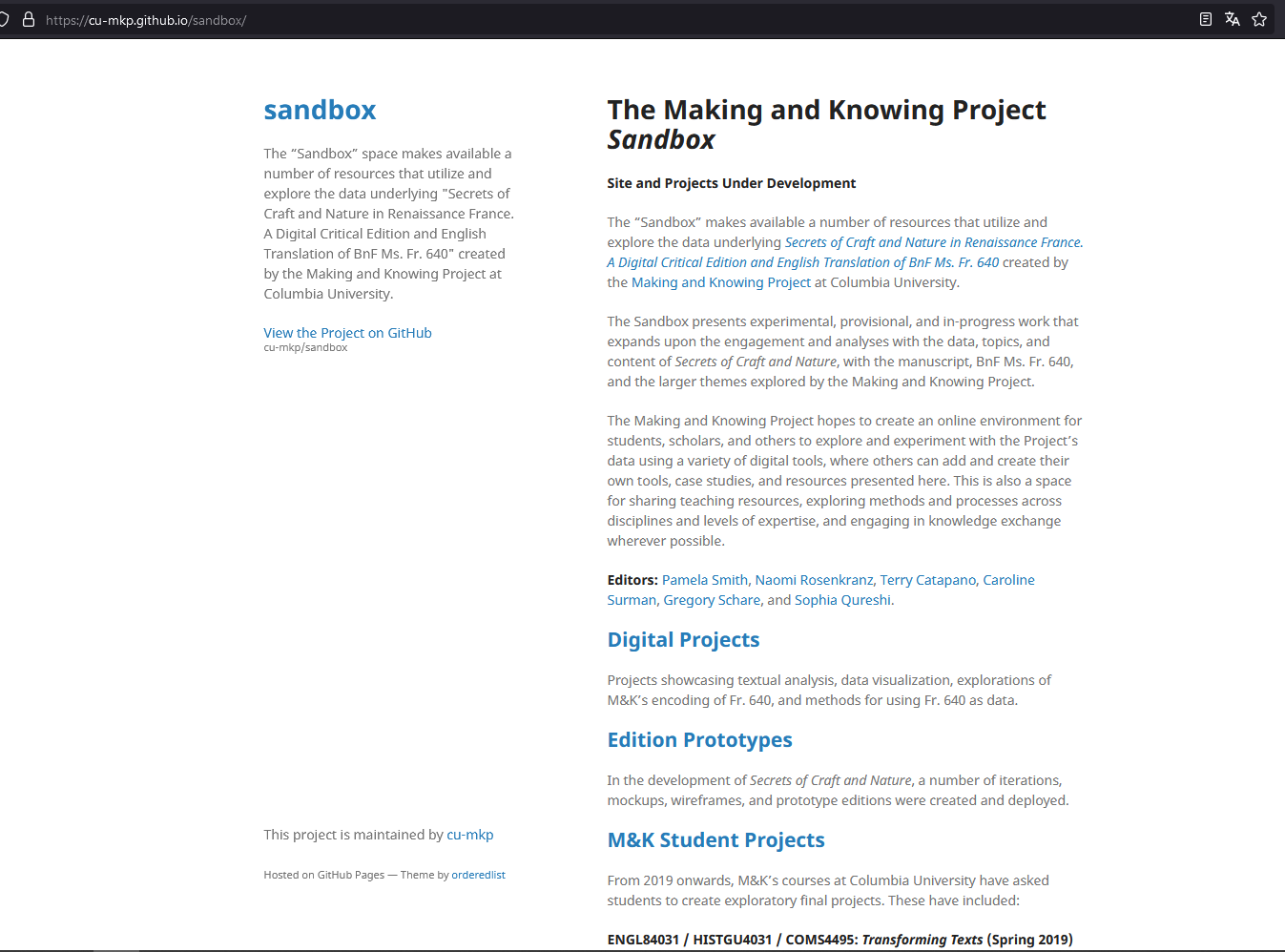
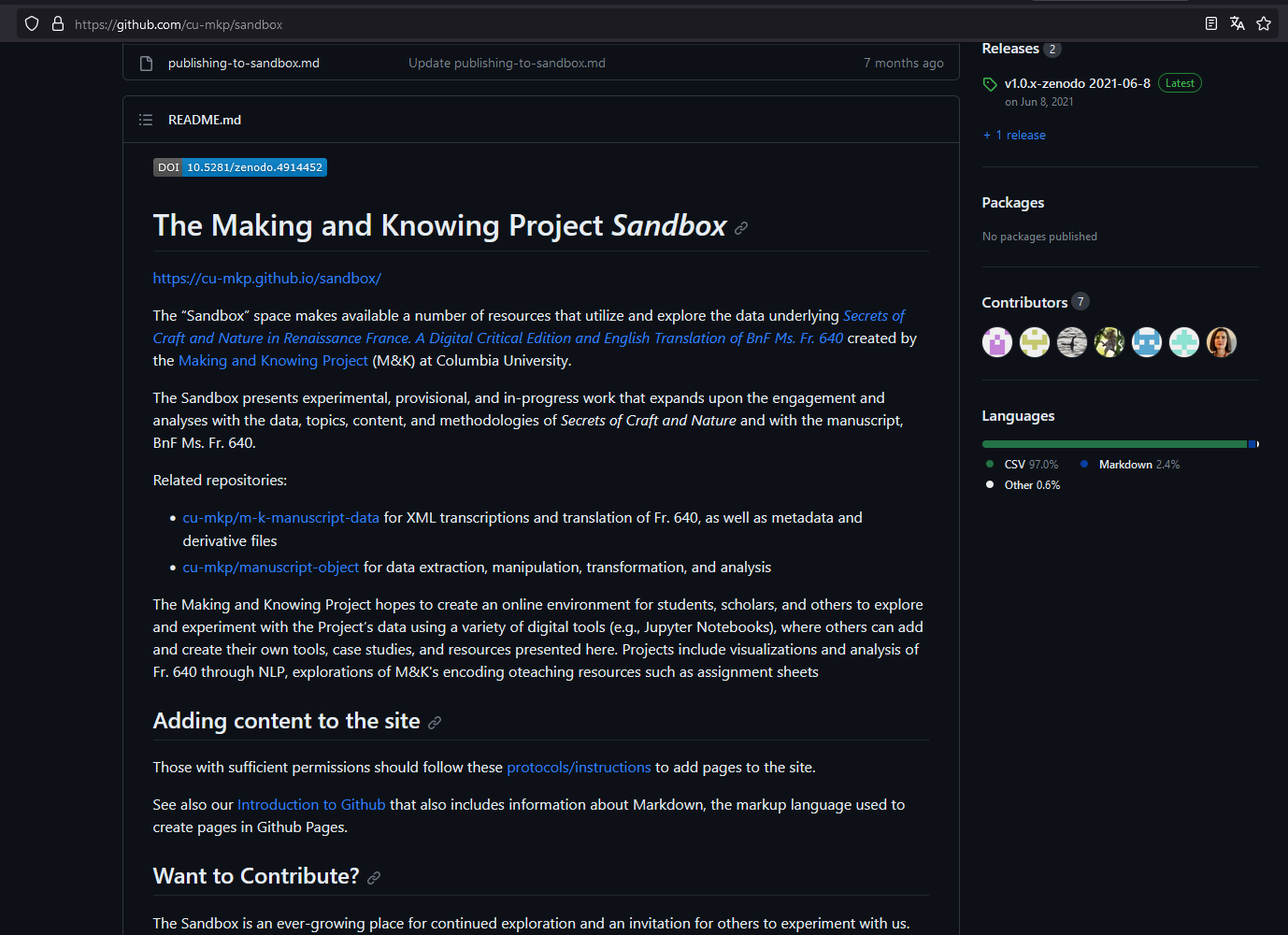
In terms of Digital Humanities, the most interesting part of the sandbox is probably the sub-site “Digital Projects”* which contains entries such as: “Interacting with the Manuscript object in Python” (2020-11-02), “Understanding and Analyzing the Categories of the Entries in BnF Ms. Fr. 640” (2021-02-01), “Applying Machine Learning to the Manuscript: Semantic Trees, Word Clouds, and Sentence Embedding” (Dana Chaillard), “Visualizing the Semantic Tagging in Secrets of Craft and Nature” (Roni Kaufman), “ms-text-analysis: Files and tools for performing textual analysis of BnF Ms Fr 640” (2020-02-04) as well as “Visualizing Semantic Markup in BnF Ms. Fr. 640” by Making and Knowing postdoctoral scholar Clément Godbarge (2021-03-09). It also allows users to use Voyant Tools to explore the manuscript data (in v1.2.0 using “Normalized French” or “English Translation”). Related repositories to the sandbox are “cu-mkp/m-k-manuscript-data for XML transcriptions and translation of Fr. 640, as well as metadata and derivative files” as well as “cu-mkp/manuscript-object for data extraction, manipulation, transformation, and analysis”. The Manuscript Data Repository contains working files, data as well as XML transcription and translation for BnF Ms. Fr 640 along with complementary data such as metadata and bibliographies.* The repository is documented extremely well using READMEs. However, the ms-xml subdirectory seems to include files with the naming ending in “preTEI.xml” which aren’t valid TEI files. This would indicate that the creation of TEI-conforming XML outputs was intended although this is in contradiction to the documentation stating that a project-specific schema was used. It is not clear whether TEI-conformant XML files can be found anywhere on the website or whether the creation thereof was implemented at all. The manuscript-object repository provides the Making and Knowing dataset based on the digital critical edition in the form of a custom python manuscript object the use of which is also well-documented in the README.md (including code examples).* It is to be commended that releases of the contents of the GitHub repositories are archived in Zenodo as well. The edition was inspired by Minimal Computing principles to promote long-term sustainability.
Usability
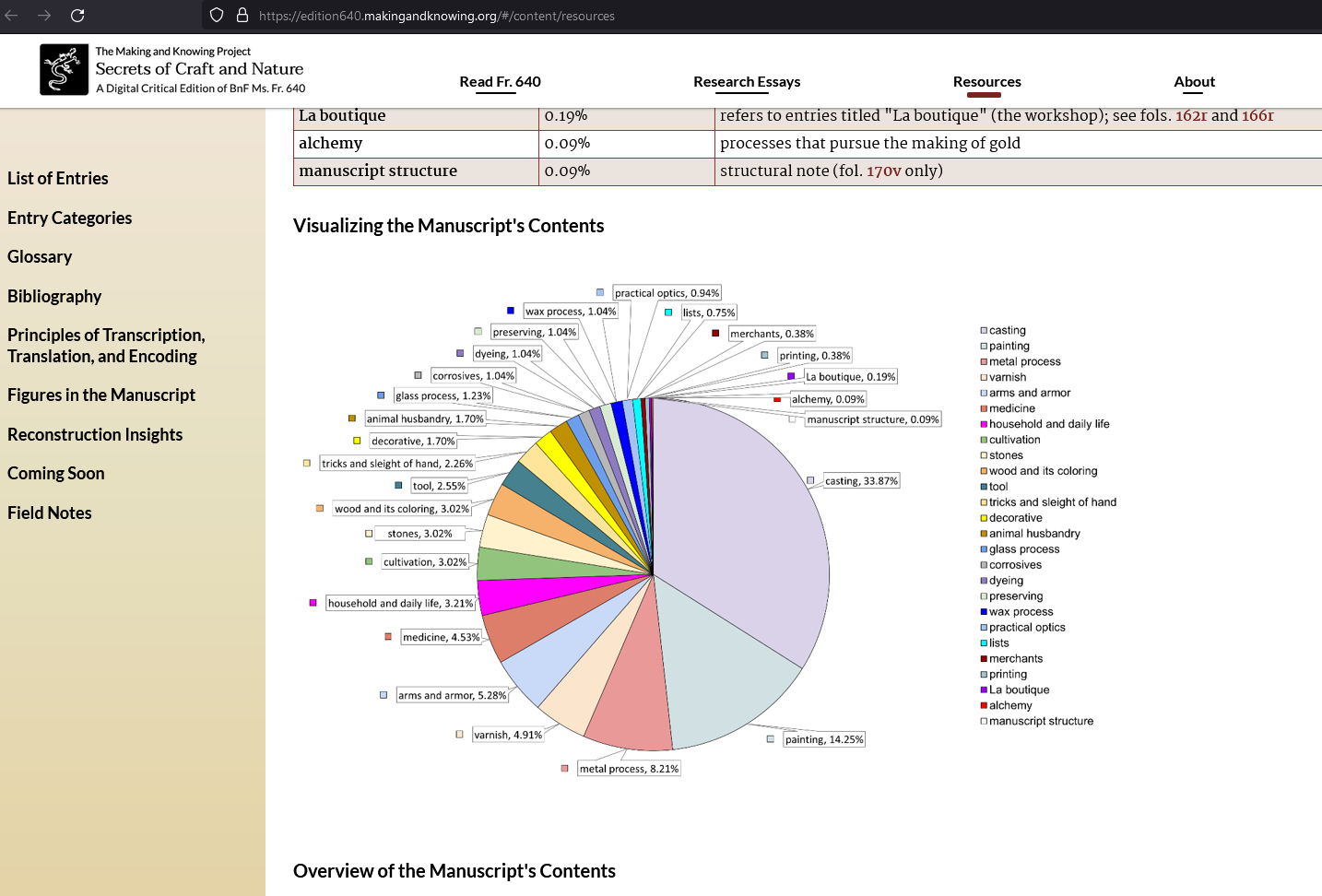
A minor annoyance is that in many parts of the website, headings are rendered as images rather than digital text, making them inaccessible to screen readers and preventing users from copying them. This may limit navigation for screen reader users, who may miss out on key structural cues across sub-sites. Otherwise, the website is generally intuitive and easy to use, especially following the updated relaunch in 2021 (see Fig. 15, 16, and 17 for different sections of the website). However, the edition view can be slow to load. In such cases, the Making and Knowing logo—a gecko from the manuscript—appears spinning, though this sometimes leads to a timeout. Pre-loading lower-resolution images could improve front-end performance and provide a smoother user experience.
Furthermore, users may find themselves overwhelmed by the sheer volume of information offered by the Making and Knowing Project. It could be helpful to introduce thematic pathways or improve subject-based access through tagging and faceted search options. Nevertheless, the current site structure is more than adequate for users to navigate and locate relevant materials. If materials will continue to be added in the long term, it will be important to develop efficient ways of accessing the expanding collection of research essays associated with the broader Making and Knowing Project, particularly for users who may not yet know what specifically interests them.
The project outputs are licensed CC BY-NC-SA 4.0.
Ending a Long-Term Project
The original version of this review was written in late 2022 and 2023. Since then, only minor changes have been made to the project, especially the digital scholarly edition at the core of this review.* At the time, it appeared the project might still be ongoing, based on a Making and Knowing newsletter that mentioned additional funding for digital scholarly editing: In the Making and Knowing newsletter from 17 August 2022, the project announced receiving a new NSF grant to support the development and dissemination of the open-source, customisable tool Edition Crafter. This tool, based on the software developed for Secrets of Craft and Nature, is intended to enable others to publish their own digital critical editions as feature-rich yet sustainable websites.
The 17 July 2024 newsletter announced the departure of Assistant Director Naomi Rosenkranz in 2024. That year, the project also hosted another Open Laboratory Day at Columbia, during which students participated in a workshop to develop a research and teaching companion intended to help educators use the platform and demonstrate how to incorporate hands-on experimentation in teaching. This research and teaching companion for Making and Knowing is now available through the web portal as well—an open-source, open-access online platform offering curated, searchable, and downloadable guides, lesson plans for hands-on activities, and case studies for research and teaching.* The Making and Knowing Project has thus produced a wide range of material not only in Digital Humanities and the history of science but also in public outreach and citizen science.* As part of a series of student projects, the Computer Graphics and User Interfaces Lab (CGUI) at Columbia University, under the direction of Professor Steven Feiner, developed an augmented reality (AR) toolset to complement the Secrets of Craft and Nature Project. These interactive tools are designed to convey the practice-based, experiential knowledge produced in the Making and Knowing Lab. Through visualisation technologies, such as Microsoft HoloLens and Google Tango devices, users are enabled to engage with historical techniques in an immersive manner, experiencing processes rather than solely reading about them. These activities remain connected to the broader intellectual framework of Making and Knowing, though not to the digital scholarly edition, which can now be considered complete.
EditionCrafter
The minimal edition tool, originally developed within the Making and Knowing Project, has since been expanded into a standalone resource: Now known as EditionCrafter, it was presented in a workshop at the 2025 ADHO Digital Humanities Conference in Lisbon.* While it constitutes a significant and valuable outcome of the broader project, it is not the main focus of this review. Copyrighted in 2022, EditionCrafter appears largely complete, although recent updates to the GitHub repository and the 2025 workshop indicate ongoing development and support.
EditionCrafter is an open-source platform designed for publishing digital scholarly editions, enabling the creation of diplomatic renderings of texts alongside deep-zoom views of original folios. Editions may include multiple textual layers, such as transcriptions paired with translations, and support the display of editorial notes and glossaries. Inheriting its methodological approach from its parent edition, EditionCrafter employs minimal computing strategies to generate static websites. It operates without a server or backend infrastructure; all components are rendered from XML-TEI at the time of build. Projects may be initiated with as little as a set of image files and corresponding plain text transcriptions. The resulting edition is economical to host and can be maintained on nearly any standard internet hosting service. A notable feature is its permalinking capability, which allows stable references to individual pages within primary source materials.
Building on the functionality of its predecessor, the development team behind EditionCrafter conducted a survey of typical requirements expressed by their Humanities collaborators. Two tasks often proved challenging for collaborators lacking technical support: the transformation of plain text transcriptions into digital scholarly editions encoded in XML-TEI, and the organisation of image sets for hosting via a IIIF server. In response, the EditionCrafter build process was adapted to better accommodate these use cases. A key requirement is that the XML-TEI file includes references to folio images within the <facsimile> element. A command-line utility, distributed as @cu-mkp/editioncrafter-cli, is provided to convert base documents into the necessary output formats for the final edition. EditionCrafter is designed to function within content management systems (CMS) that support HTML editing. It has been tested across several platforms, including Hugo CMS, Scalar CMS, and the Astro framework. The tool can be embedded directly into an HTML-based website or implemented as a React component within a React application. A ready-to-use example site built with Hugo is available for forking via the project’s GitHub repository.
Conclusion
The experimental history of science aims to replicate historical experiments and recipes in contemporary laboratories. This approach goes beyond revisiting historical texts, using practical making as a method to bridge gaps in the historical record. Recipe texts were once interpreted by craftspeople whose tacit knowledge allowed them to navigate implicit instructions. For modern readers, removed by centuries and lacking this experiential background, such texts often appear opaque. The project's aim was to recreate aspects of this practical understanding by using making as an epistemic tool. Practical making was both studied in historical texts and used as a method to investigate and fill gaps in the sources that transmit chymical and craft recipes.
The Making and Knowing Project has had a widespread impact on the history of science and knowledge, beyond the manuscript under review here. The project’s principal investigator, Pamela Smith, published the definitive study From Lived Experience to the Written Word: Reconstructing Practical Knowledge in the Early Modern World (University of Chicago Press, 2022). This book provides a comprehensive account of practical and recipe literature, and of the broader phenomenon of encoding practical knowledge in writing, particularly in how-to books. It examines the relationship between tacit, practical knowledge and its written transmission, exploring what occurred when artisans began to record their recipes and compose tracts that presented their expertise as part of university learning. It considers artisan authors, the use of these texts, and the implications of collecting and reconstructing knowledge, including its global entanglements, situating makers’ writing within broader intellectual and social contexts. Emerging directly from almost a decade of the Making and Knowing Project and related activities, it reflects Smith’s 15–20 years of scholarship in this field and constitutes both a culmination of the project and a major contribution to the state of scholarship on the topic.
The project has shaped and continues to shape the discipline. Its interactive digital edition of BnF Ms. Fr. 640, alongside documentation of replicated experiments, offers a rich array of resources for both scholars and the public. Li (2020) highlights its pedagogical potential, but one could argue that its most significant contribution lies in popularising experimental methods in the history of science. Moreover, it is a pioneering effort in developing digital editions informed by contributions from citizen scientists and in creating editions of this unique type of text, where experimental reconstructions function as an additional scholarly apparatus.
A notable feature is the “project sandbox”, a digital platform designed for users to experiment with distant reading techniques. This platform provides access to the full dataset from the digital edition, facilitating data reuse in line with the FAIR principles by ensuring the data is accessible, reusable, and interoperable through the use of standard formats. Within the field of Digital Humanities, the Making and Knowing Project has been a pioneer in adopting and promoting minimal computing principles for digital scholarly editing. These principles have not only guided the technical implementation of the project itself but have also led to the development of a spin-off tool, EditionCrafter. This tool enables users to create sustainable digital scholarly editions with minimal technical expertise, drawing directly on the approach and implementation employed by Making and Knowing. Thus, the project has not only developed a sustainable implementation for its own purposes but has also benefited the wider scholarly community beyond the history of science and knowledge.
While engagement with materiality, experimental replication, and artisanal tacit knowledge have increasingly become the norm history of science and knowledge, the Making and Knowing Project was at the forefront in integrating the latest and best practices in Digital Humanities trends. Its pioneering approach not only recovers the tacit knowledge of historical craftspeople but also opens new research paths, such as the analysis of historical recipe books through making or distant reading. The project is not merely a study of the past; it has shaped new methods in the historiography of knowledge. As the field continues to evolve, the project will remain a central reference point for researchers and enthusiasts alike.